
Digital: The Future Is Now

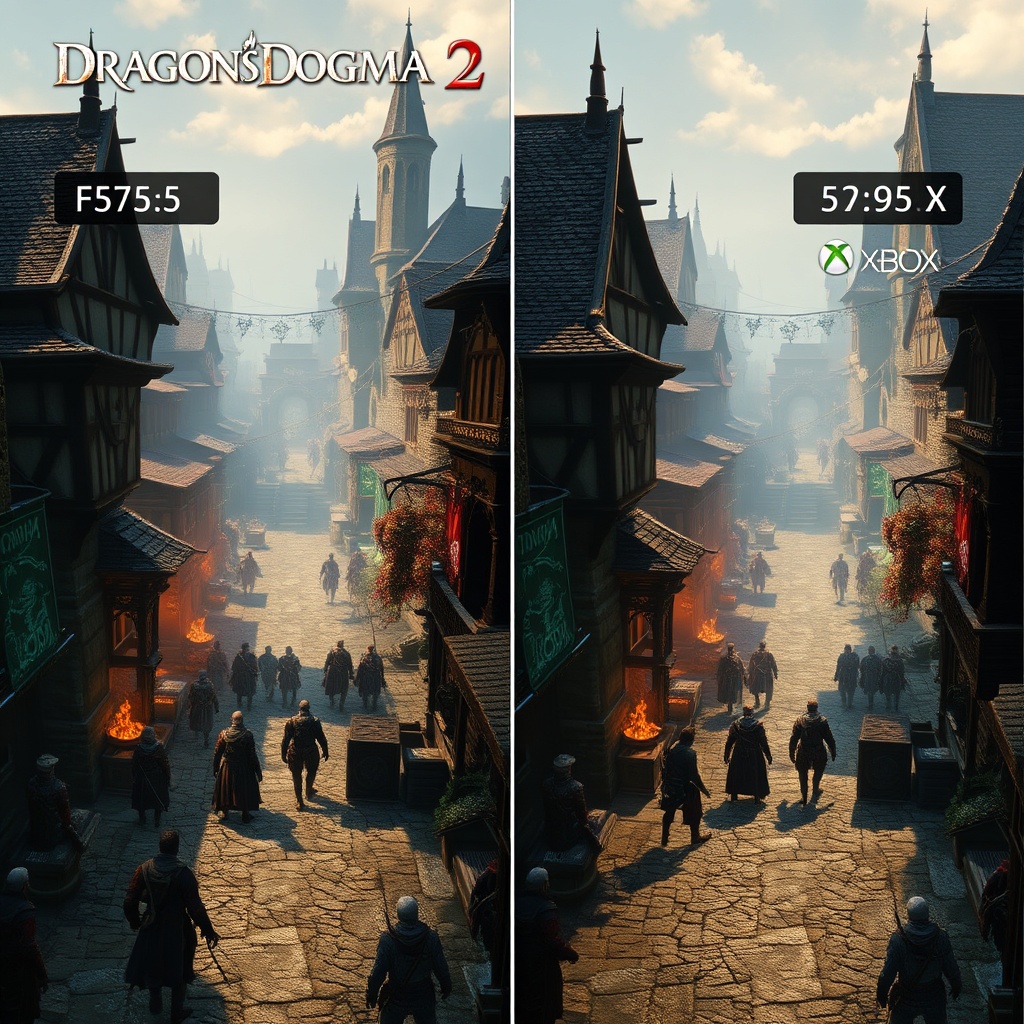
Welcome to the forefront of gaming analysis, where performance meets passion in the rapidly evolving world of digital entertainment. As technology relentlessly pushes boundaries, understanding the intricate dance between hardware and software becomes paramount for enthusiasts and developers alike. This deep dive into Digital Foundry’s comprehensive frame rate test and tech breakdown for Dragon’s Dogma 2 on PlayStation 5 and Xbox Series X offers invaluable insights into the current state of console gaming.
In this analysis, we peel back the layers of Capcom’s highly anticipated action RPG, scrutinizing its technical prowess and identifying where each console excels or stumbles. Our focus is on providing a clear, concise, and highly informative overview, mirroring the meticulous work of Digital Foundry. Prepare to navigate the complex world of frame rates, resolutions, and graphical fidelity, ensuring you’re fully equipped with the knowledge to appreciate the sophisticated digital rendering that brings these fantastical worlds to life.
The Digital Frontier: Unpacking Dragon’s Dogma 2 Performance
Dragon’s Dogma 2, a sprawling open-world fantasy RPG, has captivated players with its ambitious scale and intricate systems. Built on Capcom’s formidable RE Engine, the game promises a rich, dynamic experience, pushing the graphical capabilities of current-generation consoles. However, with such ambition often comes the challenge of maintaining consistent performance across different hardware platforms, a crucial aspect of the digital gaming experience.
Digital Foundry, renowned for their in-depth technical analyses, has taken on the task of dissecting Dragon’s Dogma 2’s performance on both the PlayStation 5 and Xbox Series X. Their findings offer a critical perspective on how well the game leverages the power of these machines. This includes examining frame rates, resolution targets, and the impact of various graphical settings.
Digital Foundry’s Methodical Approach to Performance Analysis
Digital Foundry employs a rigorous methodology to deliver their technical breakdowns, making them a trusted source for performance analysis in the digital media landscape. Their process involves capturing raw gameplay footage, often from specific, repeatable scenarios, and then meticulously analyzing frame-by-frame data. This allows for precise measurements of frame rate stability, frame times, and resolution scaling.
Beyond raw numbers, Digital Foundry also delves into the underlying technical decisions made by developers. They investigate aspects like dynamic resolution scaling, anti-aliasing techniques, shadow quality, texture filtering, and the effectiveness of various rendering pipelines. This holistic approach provides a complete picture of a game’s technical implementation and its real-world impact on player experience in the digital realm of gaming.
Dragon’s Dogma 2 on PS5: A Digital Deep Dive
The PlayStation 5, with its powerful custom AMD RDNA 2 GPU and fast SSD, is expected to deliver a premium gaming experience. Digital Foundry’s analysis of Dragon’s Dogma 2 on PS5 reveals a complex performance profile. The game generally targets an uncapped frame rate, meaning it attempts to run as fast as possible without a fixed ceiling, which can lead to variability.
In demanding open-world scenarios, particularly within busy towns or during intense combat encounters, the PS5’s frame rate often fluctuates significantly. While it can occasionally hit over 30 frames per second (fps), drops into the low 20s and even teens are observed in certain areas. This variability can impact the fluidity of gameplay and the overall responsiveness of player input, a critical factor for any digital action RPG.
Resolution on the PS5 is also dynamic, with Digital Foundry noting targets often hovering around 1440p-1800p, upscaled to 4K. While the visual fidelity remains impressive, the dynamic scaling is clearly a tool used to manage the demanding graphical load. The visual presentation of the world, characters, and intricate details are undeniably stunning, showcasing the power of the RE Engine to craft a believable digital fantasy world.
Xbox Series X Performance: Navigating the Digital Landscape
The Xbox Series X, boasting slightly more raw GPU power than the PS5, presents a similar, yet subtly different, performance narrative for Dragon’s Dogma 2. Like its PlayStation counterpart, the Series X also runs with an uncapped frame rate, leading to comparable fluctuations. Performance metrics largely mirror the PS5, with frame rates frequently dipping below the desired 30fps threshold in graphically intensive scenes.
Digital Foundry’s findings indicate that the Xbox Series X also struggles to maintain a consistent frame rate, particularly in the open world and during effects-heavy combat. Drops into the low 20s are common, reflecting the game’s demanding nature on both consoles. The overall experience, in terms of frame rate stability, is remarkably similar between the two platforms, suggesting a shared bottleneck or optimization challenge within the game engine itself. This highlights the universal challenges of optimizing expansive digital open worlds.
Resolution on the Xbox Series X also employs dynamic scaling, with similar targets to the PS5, often in the 1440p-1800p range. Visually, the game looks excellent on Series X, with high-quality textures, lighting, and environmental details. Both consoles deliver a visually rich experience, but neither achieves a consistently smooth frame rate, especially when the action heats up or dense environments are rendered. The commitment to visual fidelity is clear, but it comes at a digital performance cost.
The Digital Divide: PS5 vs. Xbox Series X Performance Metrics
When directly comparing the PS5 and Xbox Series X, Digital Foundry’s analysis reveals that Dragon’s Dogma 2 performs very similarly across both platforms. There isn’t a significant “winner” in terms of raw frame rate or resolution consistency. Both consoles exhibit pronounced frame rate variability, often hovering in the 20-30fps range, with noticeable dips below 25fps in challenging scenarios.
The primary reason for this shared performance profile appears to stem from the game’s heavy reliance on CPU power, particularly for physics, NPC AI, and world simulation. The RE Engine, while incredibly versatile, seems to be pushing the limits of the consoles’ CPUs in Dragon’s Dogma 2’s expansive world. This CPU bottleneck impacts both consoles similarly, despite their slight architectural differences, demonstrating a common challenge in digital game development.
The visual settings, including draw distance, crowd density, and environmental detail, are also largely identical between the two platforms. This means that while performance is similar, so is the overall graphical presentation. Neither console makes significant compromises over the other in terms of visual features, ensuring a consistent aesthetic in the digital game universe. The ambition of the game’s scope is evident in these shared high settings.
RE Engine and Future Digital Optimizations
Capcom’s RE Engine has proven to be a powerhouse, delivering stunning visuals and solid performance in titles like Resident Evil Village and Devil May Cry 5. However, Dragon’s Dogma 2 represents a significant leap in scale and complexity for the engine, particularly with its vast open world and numerous dynamic systems. This expansion into a more open-ended design presents new optimization challenges that are inherent to the digital open-world genre.
The CPU-bound nature of Dragon’s Dogma 2 suggests that future patches or updates might focus on optimizing these backend processes. Developers could explore techniques to reduce CPU overhead, such as more efficient culling systems, smarter AI routines, or further refinements to asset streaming. These optimizations are crucial for improving the overall fluidity and responsiveness of the game, enhancing the player’s interaction within this digital world.
The importance of post-launch support for complex digital titles like Dragon’s Dogma 2 cannot be overstated. Developers often continue to refine and improve performance based on player feedback and further analysis. A commitment to ongoing optimization ensures that the game can reach its full potential, providing a more consistent and enjoyable experience for all players over time. This continuous improvement is a hallmark of modern digital product development.
Optimizing the Digital Experience: The Path Forward
For players, understanding these performance nuances is key to managing expectations and appreciating the technical ambition of Dragon’s Dogma 2. While the current performance might not always hit a consistent 30fps, the sheer scope and visual fidelity remain impressive. The game offers a rich, immersive experience that, despite its technical quirks, is a testament to Capcom’s vision in the digital gaming era.
From a developer’s perspective, Digital Foundry’s analysis provides valuable data points for future optimization efforts. Identifying CPU bottlenecks and areas of high frame time variability is crucial for targeting improvements effectively. The goal is always to balance visual splendor with smooth performance, ensuring that the digital artistry can be fully appreciated without significant technical distractions.
The ongoing dialogue between technical analysts, developers, and the gaming community helps to push the industry forward. It highlights the complexities of modern game development and the continuous effort required to deliver polished experiences on current-generation hardware. This collaborative ecosystem is vital for the continued evolution of the digital entertainment industry.
Conclusion: The Digital Future Is Now
Digital Foundry’s meticulous breakdown of Dragon’s Dogma 2 on PS5 and Xbox Series X offers a fascinating glimpse into the technical challenges and triumphs of modern game development. While both consoles deliver a visually stunning experience, they share similar performance characteristics, particularly concerning frame rate stability. The game’s ambitious scope, driven by the powerful RE Engine, appears to push the CPU limits of both platforms, leading to noticeable fluctuations.
This analysis underscores the importance of detailed technical reviews in the digital age, providing invaluable information for players and developers alike. It highlights that even with cutting-edge hardware, optimizing vast, dynamic open worlds remains a significant hurdle. As the digital gaming landscape continues to evolve, the pursuit of perfect performance will always be a key objective, driving innovation and pushing creative boundaries.
Despite the current performance variability, Dragon’s Dogma 2 stands as a monumental achievement in its own right, offering an incredibly rich and engaging digital adventure. We encourage you to experience this epic journey for yourself and appreciate the incredible effort that goes into crafting such expansive worlds. What are your thoughts on Dragon’s Dogma 2’s performance? Share your experiences and insights in the comments below, and let’s continue the conversation about the future of digital gaming!
Leave a Comment