
Why Amd Radeon 7900 Reigns Supreme

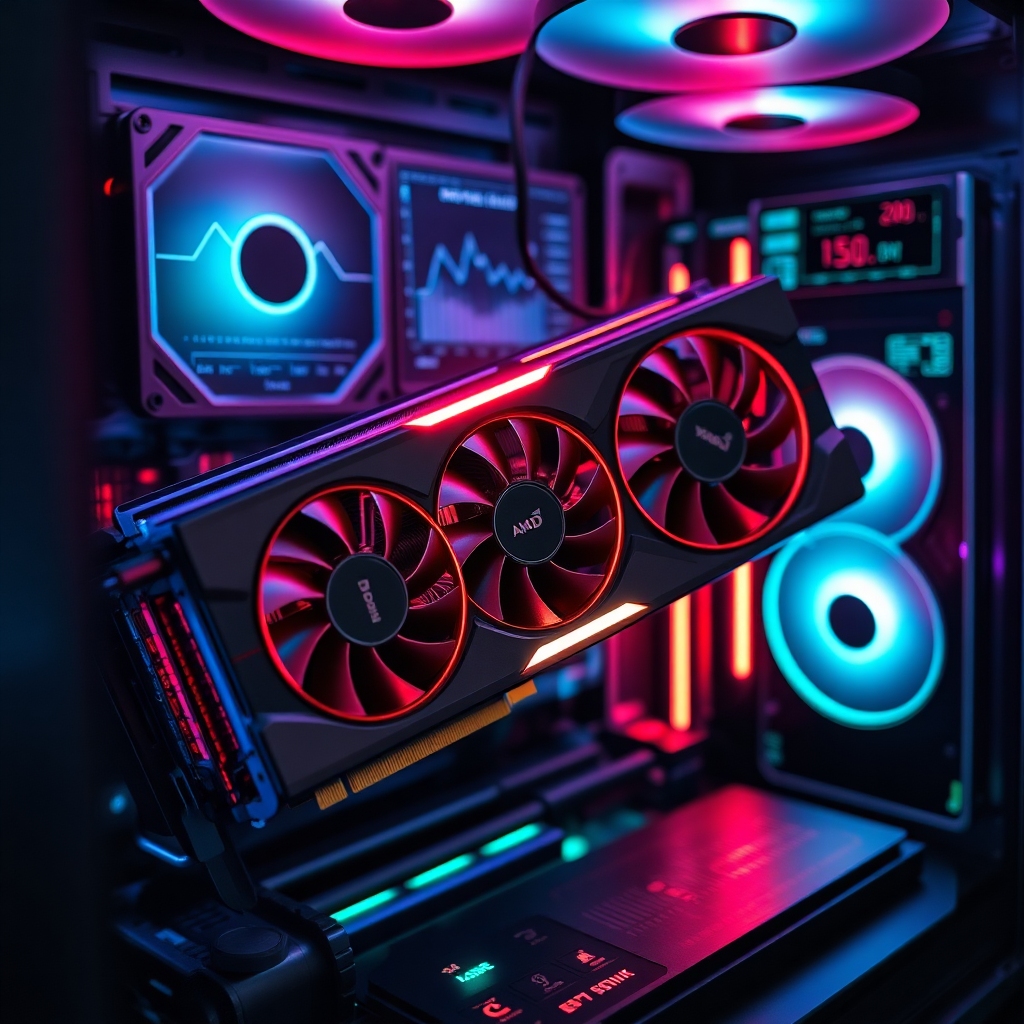
In the competitive landscape of high-performance graphics cards, discerning gamers and content creators are constantly searching for the perfect blend of power, efficiency, and value. Enter the AMD Radeon RX 7900 GRE, a GPU that has quietly, yet powerfully, carved out a significant niche. This review dives deep into what makes the Amd Radeon 7900 GRE a formidable contender, examining its benchmarks, real-world gaming performance, and overall value proposition. We’ll explore why this particular iteration of AMD’s RDNA 3 architecture might just be the reigning champion for many.
The graphics card market is awash with options, but the Amd Radeon 7900 GRE distinguishes itself through a strategic combination of specifications and pricing. Originally launched as a China-exclusive “Golden Rabbit Edition” (GRE), it has since become more widely available, bringing its unique performance profile to a global audience. Our analysis will help you understand if this GPU is the right upgrade for your system, promising an in-depth look at its capabilities and market position.
Unpacking the Amd Radeon 7900 GRE: Specifications and Architecture
At the heart of the Amd Radeon 7900 GRE lies the RDNA 3 architecture, specifically a cut-down variant of the Navi 31 GPU. This architecture introduces a chiplet design, separating the Graphics Compute Die (GCD) from the Memory Cache Dies (MCDs). This innovative approach aims to improve manufacturing efficiency and performance scalability.
The GRE variant typically features 80 compute units, translating to 5120 stream processors, which is a slight reduction compared to its more powerful siblings like the RX 7900 XT. It is equipped with a generous 16GB of GDDR6 VRAM across a 256-bit memory bus, providing ample memory bandwidth for even the most demanding modern games and applications. This substantial VRAM capacity is a significant advantage, especially as game textures and asset sizes continue to grow.
Clock speeds are also robust, with a typical game clock around 1.8-2.0 GHz and a boost clock pushing past 2.2 GHz, depending on the specific board partner and cooling solution. The card generally operates within a 260W Total Board Power (TBP) envelope, making it a relatively efficient performer for its class. Understanding these core specifications is crucial to appreciating the performance it delivers.
RDNA 3 Innovations Powering the Amd Radeon 7900
RDNA 3 brings several key innovations, including second-generation Ray Tracing Accelerators and new AI Accelerators. These enhancements are designed to improve performance in advanced rendering techniques and future-proof the card for AI-driven workloads. The Amd Radeon 7900 GRE benefits directly from these architectural advancements, offering a more refined and capable experience than previous generations.
The unified RDNA 3 compute units are optimized for both graphics and compute tasks, ensuring versatility beyond just gaming. This makes the Amd Radeon 7900 a compelling option for users who dabble in content creation, video editing, or other GPU-accelerated applications. Its foundation is built on modern technology, promising strong performance for years to come.
Benchmarking the Amd Radeon 7900 GRE: Raw Power Unleashed
Synthetic benchmarks provide a foundational understanding of a GPU’s raw horsepower. The Amd Radeon 7900 GRE consistently demonstrates strong performance in popular benchmarking suites like 3DMark Time Spy, Port Royal, and Fire Strike. These tests showcase its rasterization capabilities, often placing it competitively against NVIDIA’s RTX 4070 Super and, in some scenarios, even challenging the RTX 4070 Ti.
In rasterization-heavy tests, the Amd Radeon 7900 GRE typically excels, showcasing its efficient use of its numerous stream processors and substantial memory bandwidth. Its performance in DirectX 12 and Vulkan APIs is particularly noteworthy, often outperforming rivals in titles optimized for these modern graphics interfaces. These benchmarks are a strong indicator of its potential in real-world gaming scenarios, especially at higher resolutions.
Synthetic Test Results: A Closer Look at the Amd Radeon 7900
When diving into specific benchmark scores, the Amd Radeon 7900 GRE often posts impressive figures that highlight its efficiency and power. For instance, in 3DMark Time Spy, a popular benchmark for DirectX 12 performance, it routinely scores in the range that signifies excellent 1440p and solid 4K gaming potential. This is a testament to AMD’s RDNA 3 architecture and its ability to deliver high frame rates in demanding scenarios.
While synthetic benchmarks don’t always perfectly translate to every game, they establish a clear performance baseline. The strong showings of the Amd Radeon 7900 in these controlled environments suggest it’s well-equipped to handle the most graphically intensive titles available today. This raw power is a significant factor in its appeal to performance-oriented users.
Gaming Performance: Conquering Virtual Worlds with the Amd Radeon 7900
Synthetic benchmarks are one thing, but real-world gaming performance is where a GPU truly proves its worth. The Amd Radeon 7900 GRE shines brightly across a wide array of modern AAA titles, offering a premium gaming experience, particularly at 1440p and often extending into 4K.
For gamers targeting high refresh rates at 1440p, the Amd Radeon 7900 is an absolute powerhouse. Games like Cyberpunk 2077, Alan Wake 2, and Starfield run smoothly at high to ultra settings, delivering impressive frame rates that ensure fluid and immersive gameplay. The 16GB VRAM provides plenty of headroom, preventing performance bottlenecks in texture-heavy environments.
Even at 4K resolution, the Amd Radeon 7900 GRE holds its own. While some of the most demanding titles might require a slight reduction in settings or the use of FSR (FidelityFX Super Resolution) to maintain 60+ FPS, the overall experience remains highly enjoyable. Its ability to deliver solid 4K performance at a competitive price point makes it an attractive option for enthusiasts.
1440p Dominance: Smooth Gameplay with the Amd Radeon 7900
The sweet spot for the Amd Radeon 7900 GRE is undoubtedly 1440p gaming. This resolution strikes an excellent balance between visual fidelity and performance, allowing the card to push high frame rates consistently. In popular esports titles like Valorant, CS2, or Apex Legends, users can expect hundreds of frames per second, taking full advantage of high refresh rate monitors.
For graphically intense single-player experiences, such as Assassin’s Creed Mirage or Forza Horizon 5, the Amd Radeon 7900 delivers frame rates well above 60 FPS, even with most settings cranked to maximum. This ensures a buttery-smooth visual experience, enhancing immersion and responsiveness. The card truly allows 1440p gamers to fully unleash their monitors’ potential.
4K Capabilities: Pushing the Limits with the Amd Radeon 7900
While 1440p is its comfort zone, the Amd Radeon 7900 GRE is surprisingly capable at 4K. Many titles from the last few years can be played at 4K with high settings and achieve frame rates comfortably above 60 FPS. This includes games like Resident Evil 4 Remake and God of War, where the visual fidelity at 4K is breathtaking.
For the most demanding 4K games, particularly those with heavy ray tracing implementations, leveraging AMD’s FSR technology can provide a substantial boost. This allows gamers to maintain high frame rates without a noticeable drop in visual quality. The Amd Radeon 7900 offers a compelling entry point into 4K gaming without breaking the bank, providing a premium experience for many titles.
Ray Tracing and Upscaling: Advanced Features of the Amd Radeon 7900
Ray tracing is a demanding rendering technique that simulates light more realistically, and while AMD has made significant strides with RDNA 3, it still faces stiff competition. The Amd Radeon 7900 GRE’s second-generation Ray Tracing Accelerators offer a noticeable improvement over previous AMD cards, enabling playable frame rates in many ray-traced titles, especially at 1440p.
However, when compared head-to-head with NVIDIA’s latest offerings in heavily ray-traced games, the performance gap can still be present. This is where AMD’s FidelityFX Super Resolution (FSR) becomes an indispensable tool. FSR is an open-source upscaling technology that renders games at a lower resolution and then intelligently reconstructs them to a higher resolution, significantly boosting frame rates.
FSR is widely supported across many games and can effectively bridge the performance gap in ray-traced scenarios or simply provide higher frame rates for a smoother experience. The combination of improved hardware ray tracing and the flexibility of FSR makes the Amd Radeon 7900 a more versatile card for modern gaming. Users can choose to prioritize raw performance or enhanced visual fidelity with the flick of a switch.
Value Analysis: Is the Amd Radeon 7900 GRE a Smart Investment?
The “GRE” in Amd Radeon 7900 GRE often implies a strategic price point, positioning it as a strong value contender. Historically, it has been priced to undercut direct NVIDIA competitors while offering comparable, if not superior, rasterization performance. This makes it a very attractive option for gamers looking to maximize their performance-per-dollar.
When evaluating value, it’s not just about the initial purchase price. Factors like power consumption, cooling solutions, and the overall software ecosystem also play a role. The Amd Radeon 7900 GRE generally offers a respectable power efficiency, and board partners provide excellent cooling designs that keep temperatures in check, ensuring stable and consistent performance over long gaming sessions.
AMD’s Adrenalin software suite also provides a robust set of features, including performance tuning, recording tools, and driver updates, enhancing the overall user experience. For many, the balance of price, performance, and features offered by the Amd Radeon 7900 positions it as an exceptionally smart investment for a high-end gaming PC.
Price vs. Performance: The Sweet Spot of the Amd Radeon 7900
The Amd Radeon 7900 GRE truly hits a sweet spot in the market for price-to-performance. It often delivers gaming experiences that rival more expensive cards from competitors, particularly in traditional rasterization. This makes it an ideal choice for gamers who prioritize raw frame rates in their favorite titles without necessarily needing the absolute bleeding edge of ray tracing performance.
Considering its 16GB of VRAM, which is becoming increasingly important for future-proofing and demanding game engines, the Amd Radeon 7900 offers excellent longevity. This generous memory buffer ensures that the card won’t be limited by VRAM capacity in upcoming titles, a common concern for cards with less memory.
Long-Term Viability: Future-Proofing with the Amd Radeon 7900
Investing in a high-end GPU is a decision that often considers future-proofing. The Amd Radeon 7900 GRE, with its 16GB of GDDR6 VRAM and modern RDNA 3 architecture, is well-positioned for the games of tomorrow. As game developers continue to push graphical boundaries, higher VRAM capacities will become increasingly critical to maintain optimal performance.
AMD’s commitment to driver updates and software optimizations also contributes to the long-term viability of the Amd Radeon 7900. Regular updates often bring performance improvements, bug fixes, and support for new gaming technologies. This ongoing support ensures that your investment continues to deliver top-tier performance for years to come, maximizing its value.
Potential Downsides and Considerations for the Amd Radeon 7900
While the Amd Radeon 7900 GRE is a fantastic card, it’s important to consider potential drawbacks. As mentioned, its ray tracing performance, while improved, generally lags behind NVIDIA’s equivalent offerings. If cutting-edge ray tracing is your absolute top priority, this might be a factor to weigh.
Power consumption, though reasonable for its performance tier, can be higher than some more efficient NVIDIA counterparts, which might be a consideration for users with smaller power supplies or those highly concerned with energy costs. Additionally, while driver stability has improved significantly, early adopters of new AMD cards sometimes experience minor teething issues with brand-new game releases, though these are typically resolved quickly.
These are minor considerations, however, and for the vast majority of users, the strengths of the Amd Radeon 7900 far outweigh these points. Its compelling performance and value proposition make it an easy recommendation for many PC builders and upgraders.
Conclusion: Why the Amd Radeon 7900 Reigns Supreme
The AMD Radeon RX 7900 GRE stands out as a truly exceptional graphics card, offering a compelling package of raw power, excellent gaming performance, and outstanding value. It delivers a premium 1440p gaming experience with high refresh rates and proves surprisingly capable at 4K, especially when paired with AMD’s FSR technology. Its generous 16GB of VRAM future-proofs it against increasingly demanding titles, ensuring your investment remains relevant for years.
For gamers and enthusiasts seeking top-tier rasterization performance without the premium price tag often associated with the highest-end cards, the Amd Radeon 7900 GRE is an undeniable champion. It successfully balances performance, features, and cost, making it a reigning supreme choice in its segment. If you’re looking for an upgrade that offers incredible bang for your buck and will dominate your favorite games, the Amd Radeon 7900 GRE should be at the very top of your list.
Ready to experience gaming at its best? Consider upgrading to the Amd Radeon 7900 GRE and unlock a new level of performance and immersion. Explore detailed specifications and find the best deals at your preferred retailer today!
Leave a Comment