
PS5 Pro vs. Xbox Series X: A Comparative Ray Tracing Analysis

PS5 Pro vs. Xbox Series X: A Comparative Ray Tracing Analysis
Understanding the current state of console ray tracing
Ray tracing has become the industry standard for measuring the technical prowess of modern gaming hardware. By simulating the physical behavior of light, developers can create reflections, shadows, and global illumination that feel significantly more grounded than traditional rasterization techniques. As we look at the hardware landscape, a comparative look at how these two consoles handle these complex calculations reveals the different philosophies held by Sony and Microsoft.
The Xbox Series X launched with a strong emphasis on raw power and a high teraflop count, positioning itself as a machine capable of handling demanding graphical features. On the other hand, the PS5 Pro arrives with a focus on specialized architecture designed to accelerate these specific workloads more efficiently. While both systems aim to deliver high-fidelity visuals, the path they take to achieve realistic lighting is distinct.
How the PS5 Pro architecture handles light and shadow
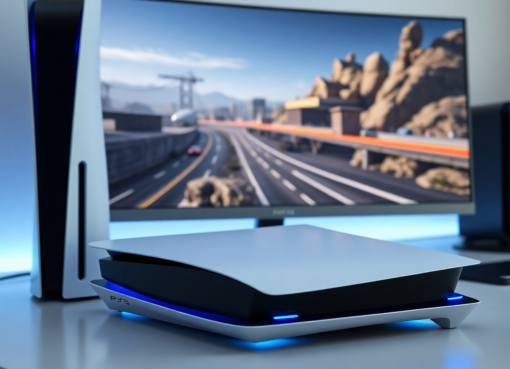
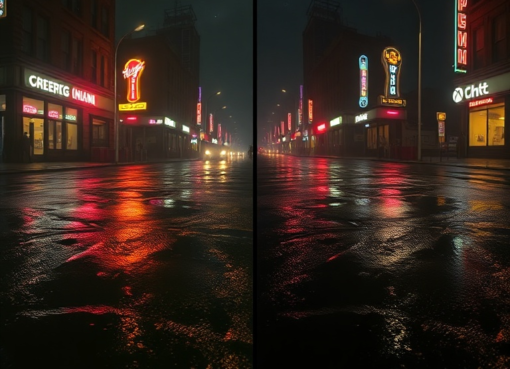
The PS5 Pro introduces significant hardware advancements specifically aimed at improving ray tracing throughput. Sony has implemented what they refer to as an advanced ray tracing engine, which allows for more complex light calculations to occur simultaneously without dragging down the overall frame rate. This is particularly noticeable in scenes with multiple light sources or complex reflective surfaces, such as wet pavement or polished glass.
By optimizing the way the GPU handles ray intersection tests, the PS5 Pro can maintain higher resolutions while keeping ray tracing effects active. This is a departure from earlier console generations where enabling ray tracing often meant a significant drop in internal rendering resolution. The system also leverages its upgraded machine learning capabilities to upscale these images, resulting in a cleaner final output that looks remarkably close to native 4K.
The Xbox Series X approach to graphical fidelity
The Xbox Series X remains a formidable piece of hardware that utilizes a robust GPU architecture to manage ray tracing tasks. From a technical perspective, the console relies on dedicated hardware acceleration to manage the bounding volume hierarchy traversal required for ray tracing. This allows the system to render realistic shadows and ambient occlusion in many of the most popular AAA titles currently on the market.
While the Xbox Series X does not feature the same specialized iteration found in the PS5 Pro, it benefits from a highly stable and mature software development environment. Many developers have spent years fine-tuning their engines for the Xbox architecture, which often results in very consistent ray tracing performance across a wide library of games. The platform excels at providing a reliable experience where the lighting effects are integrated deeply into the game world, often prioritizing stability over the extreme peak performance seen in newer, mid-generation revisions.
Analyzing the performance gap in real-world scenarios
When we conduct a comparative analysis of how these machines perform in the wild, the results often depend on the specific engine being used. Games optimized specifically for the PS5 Pro’s new architecture can push lighting effects that were previously reserved for high-end gaming PCs. We see this in titles where the PS5 Pro maintains a higher density of rays, leading to more accurate reflections in complex geometry like character armor or intricate indoor environments.
The Xbox Series X, meanwhile, often provides a more balanced approach. In many titles, it achieves parity with high-end settings by utilizing clever optimization techniques that mask the limitations of the hardware. The difference is rarely about one console failing to run a feature and more about how much “cost” the player pays in terms of resolution or frame rate to see those ray-traced effects in action.
The role of software and upscaling technology
Hardware is only half of the story when discussing modern ray tracing. The software layer, specifically the upscaling technology employed by each console, plays a massive role in how the final image is perceived. The PS5 Pro utilizes its new proprietary upscaling solution to reconstruct images with high fidelity, allowing it to preserve the detail of ray-traced reflections even when the base rendering resolution is lower.
Xbox relies on its own set of sophisticated upscaling tools and the inherent efficiency of the DirectX ecosystem. Because Microsoft has unified the development experience between PC and Xbox, many titles on the Series X benefit from years of PC-based ray tracing research. This comparative strength ensures that even without the specialized hardware acceleration found in newer revisions, the Xbox Series X remains a competitive platform for users who want a high-quality visual experience.
Future-proofing your gaming experience
Deciding between these two platforms often comes down to what the player values most in their gaming session. The PS5 Pro is clearly built for the enthusiast who wants the absolute latest in hardware-accelerated lighting and high-frame-rate performance. It represents the bleeding edge of what can be done with console-specific ray tracing hardware today.
Conversely, the Xbox Series X offers a reliable, powerful, and well-supported ecosystem that has proven its worth over several years. It handles ray tracing with a maturity that ensures games look beautiful and play smoothly. Both consoles are capable of delivering stunning visuals that define the current generation, and the choice between them is less about a massive gap in quality and more about which hardware philosophy aligns with your personal gaming preferences.
Final thoughts on console lighting capabilities
In conclusion, both the PS5 Pro and the Xbox Series X provide impressive windows into the future of interactive lighting. The PS5 Pro pushes boundaries with its specialized architecture and advanced upscaling, while the Xbox Series X delivers a polished and consistent experience backed by a powerful and reliable hardware foundation.
For the average player, both consoles succeed in making modern games look better than ever before. Whether you prioritize the raw technical overhead of the PS5 Pro or the established ecosystem of the Xbox Series X, you are getting a machine that treats ray tracing as a fundamental pillar of the gaming experience. As developers continue to master these tools, we can expect the visual fidelity gap to narrow even further, leading to a future where realistic lighting is simply a standard expectation in every game we play.


Leave a Comment