
Digital Foundry PS5: The Ultimate Verdict

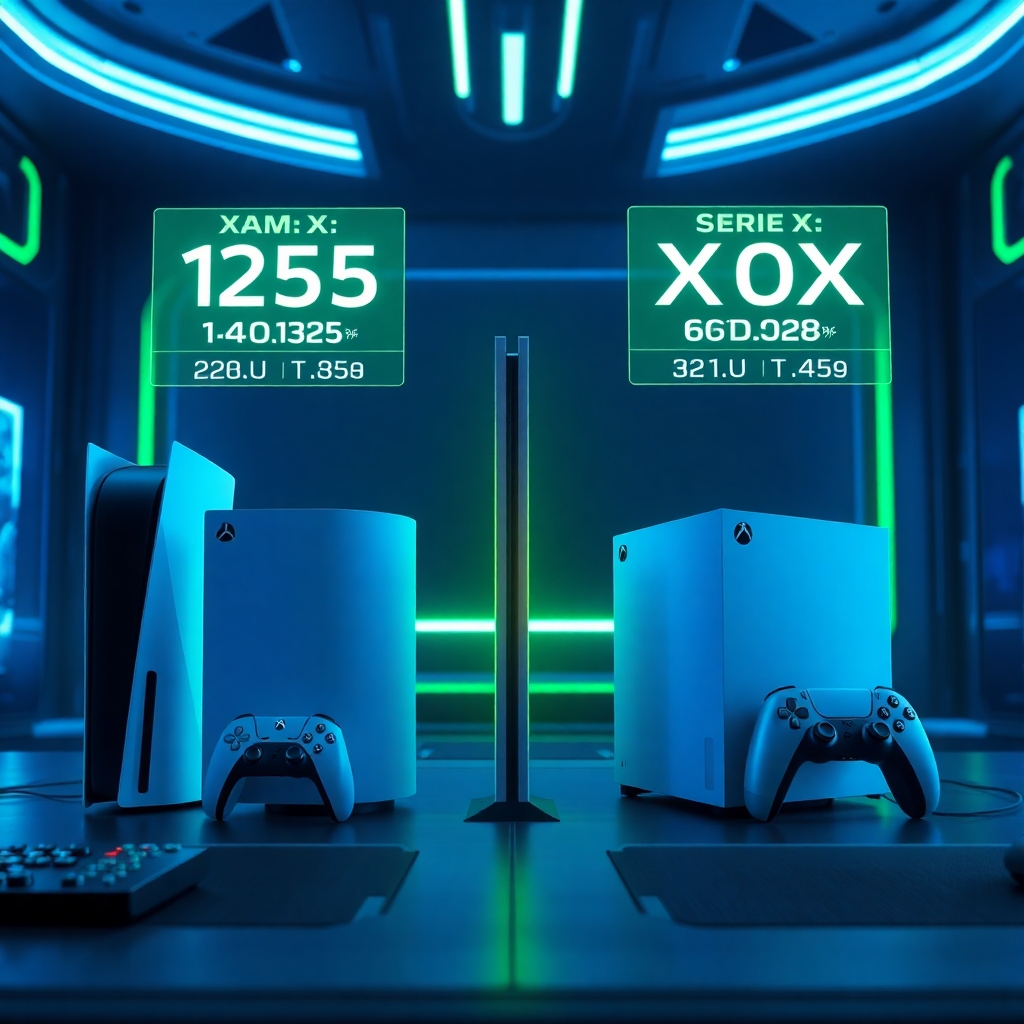
When it comes to understanding the true technical prowess of modern gaming consoles, one name consistently rises above the rest: Digital Foundry. Their meticulous, pixel-peeping analyses have become the gold standard for gamers and tech enthusiasts alike. This comprehensive breakdown delves into the latest frame rate tests and technical comparisons between the PlayStation 5 and Xbox Series X, offering insights directly from Digital Foundry’s expert perspective. We’ll explore where each console excels, identify common performance trends, and ultimately provide a definitive verdict on the performance landscape, focusing heavily on what Digital Foundry Ps5’s deep dives reveal about Sony’s flagship console.
Setting the Stage: Digital Foundry’s Rigorous Methodology
Digital Foundry isn’t just about playing games; it’s about dissecting them at a granular level. Their methodology involves frame-by-frame analysis, resolution tracking, and detailed examination of graphical settings across different platforms. This scientific approach ensures that any performance claims are backed by empirical data, not just subjective impressions.
Their work often highlights the intricate dance between CPU, GPU, and memory, revealing how developers optimize their titles for each console. For anyone serious about understanding console performance, trusting the detailed reports from Digital Foundry Ps5 analyses is paramount. They provide an invaluable service to the gaming community.
The Core Battleground: PS5 vs. Xbox Series X Hardware
At their heart, both the PlayStation 5 and Xbox Series X are powerful machines, built on AMD’s Zen 2 CPU and RDNA 2 GPU architectures. However, subtle differences in their specifications lead to varying performance characteristics. The Xbox Series X boasts a slightly more powerful GPU on paper, with more compute units and higher theoretical teraflops.
Conversely, the PlayStation 5 features a significantly faster SSD, offering unparalleled I/O throughput. This difference in storage speed has profound implications for game design, loading times, and even asset streaming. Digital Foundry Ps5 often emphasizes how this SSD speed can be a transformative factor for developers.
Digital Foundry PS5: Unpacking the SSD Advantage
The PS5’s custom 825GB SSD, with its raw bandwidth of 5.5 GB/s (and up to 9 GB/s compressed), is a game-changer. Digital Foundry has repeatedly demonstrated how this translates into near-instantaneous loading screens in many exclusive titles, and even in some cross-platform games. This isn’t just about convenience; it allows for new approaches to level design and asset management.
While the Xbox Series X’s SSD is also very fast, the PS5’s solution often shows a measurable lead in direct comparisons. This technical edge, frequently highlighted by Digital Foundry Ps5 reports, contributes significantly to the overall user experience. It allows for seamless transitions and reduces friction during gameplay.
Frame Rate Analysis: Where Digital Foundry PS5 Shines or Struggles
Frame rate is often the most visible metric of a game’s performance. Digital Foundry’s tests meticulously track frame delivery, identifying dips, stutters, and overall stability. The goal for most modern games is to hit a consistent 60 frames per second (fps), or at least maintain a stable 30fps with minimal fluctuations.
Early in the console generation, many cross-platform titles showed near-identical performance between the PS5 and Xbox Series X. However, as developers have grown more accustomed to the hardware, some interesting trends have emerged, which Digital Foundry Ps5 analyses consistently capture. These trends often depend on specific game engines and optimization strategies.
Cross-Platform Blockbusters: A Digital Foundry PS5 Perspective
When analyzing major multi-platform releases, Digital Foundry often finds that performance parity is common, but with subtle nuances. For instance, in titles like *Cyberpunk 2077* or *Alan Wake 2*, both consoles generally target similar frame rates and resolutions in their respective performance modes. However, specific scenes or effects might cause one console to drop frames more frequently or for longer durations.
Digital Foundry Ps5 has shown that the PS5 often holds a slight edge in maintaining resolution in certain demanding scenarios, or conversely, the Series X might offer a fractionally more stable frame rate. These differences are usually minor and often imperceptible to the casual eye, but critical for a deep technical breakdown. The choice of rendering techniques and engine optimizations plays a huge role here.
Visual Fidelity and Ray Tracing: Digital Foundry PS5’s Graphical Prowess
Beyond raw frame rates, visual fidelity encompasses resolution, texture quality, draw distance, and the implementation of advanced rendering techniques like ray tracing. Both consoles support hardware-accelerated ray tracing, but its implementation varies widely between games and platforms. Digital Foundry has dedicated countless hours to dissecting these graphical choices.
Ray tracing, while visually stunning, is incredibly demanding. Developers often employ dynamic resolution scaling or target lower frame rates (e.g., 30fps) to enable ray-traced effects. Digital Foundry Ps5 reports often highlight how the PS5 manages to achieve impressive ray tracing effects in its exclusives, sometimes at the cost of resolution or frame rate stability in performance modes.
In titles with robust ray tracing implementation, such as *Spider-Man: Miles Morales* or *Ratchet & Clank: Rift Apart*, the PS5 delivers stunning visuals. Digital Foundry’s analysis shows that the balance between visual quality and performance is a constant negotiation. The console’s efficient architecture plays a key role in achieving these high-fidelity experiences, even with demanding features like global illumination or reflections.
The Developer’s Canvas: Software Optimization and Ecosystems
Hardware is only half the story; software optimization is equally crucial. The developer tools, SDKs, and platform-specific APIs provided by Sony and Microsoft significantly impact how games perform. Digital Foundry has often noted that initial cross-platform ports sometimes favor one console due to developers’ familiarity with a particular SDK or workflow.
Over time, as developers become more adept at leveraging the unique strengths of each console, performance tends to converge. However, first-party titles often showcase the maximum potential of their respective platforms. This is where Digital Foundry Ps5 often highlights the unique advantages developers can squeeze out of the PlayStation hardware, especially with its bespoke I/O solution.
The ecosystem surrounding each console also plays a role. Features like the PS5’s DualSense controller, with its haptic feedback and adaptive triggers, offer unique gameplay experiences. While not directly a performance metric, these features are part of the overall console experience that Digital Foundry often considers in its broader context, emphasizing the immersive potential of the Digital Foundry Ps5 experience.
Digital Foundry PS5: The Ultimate Verdict on Performance Trends
After years of meticulous testing, what’s the ultimate verdict from Digital Foundry regarding the PS5’s performance against the Xbox Series X? The truth is nuanced. In raw GPU power, the Xbox Series X often holds a slight theoretical edge. However, the PS5’s superior SSD and highly optimized architecture frequently allow it to punch above its weight.
Many cross-platform titles show near-identical performance, with minor variations in resolution or frame rate stability that can swing either way depending on the specific game and its engine. Where the Digital Foundry Ps5 truly shines is in its exclusives, where developers can fully exploit the console’s unique strengths, particularly its fast I/O and custom hardware features.
The fast SSD of the Digital Foundry Ps5 not only reduces load times but also enables seamless world streaming and new gameplay mechanics that would be challenging on slower storage. This often leads to a more fluid and less interrupted gaming experience, a point consistently underscored by Digital Foundry’s detailed analyses. The overall package is incredibly strong.
Beyond the Benchmarks: The Player’s Perspective
While Digital Foundry’s technical breakdowns are invaluable, it’s important to remember the player’s perspective. For many, the subtle differences in frame rate or dynamic resolution scaling are imperceptible during actual gameplay. Both consoles offer incredible gaming experiences, pushing visual boundaries and delivering immersive worlds.
The choice between the PS5 and Xbox Series X often comes down to exclusive games, controller preference, and ecosystem loyalty, rather than minute technical differences. However, for those who demand the absolute best performance and want to understand the ‘why’ behind it, Digital Foundry Ps5’s comprehensive tests provide all the answers. They empower gamers with knowledge.
Understanding these technical nuances allows players to appreciate the engineering marvels that these consoles represent. It also helps in making informed decisions about which platform might better suit their specific gaming priorities. The detailed reporting by Digital Foundry Ps5 ensures transparency and clarity in an often complex technical landscape.
Looking Ahead: The Future of Digital Foundry PS5 Benchmarking
As the current console generation matures, we can expect developers to push both the PS5 and Xbox Series X even further. New optimization techniques, middleware advancements, and game engine updates will continue to evolve performance. Digital Foundry will undoubtedly be there every step of the way, providing their signature in-depth analyses.
Their future tests will likely focus on even more demanding ray tracing implementations, next-generation AI, and the continued utilization of each console’s unique architectural strengths. The ongoing insights from Digital Foundry Ps5 will remain a critical resource for understanding the true capabilities of Sony’s console. The evolution of performance is a continuous journey.
We anticipate even more fascinating comparisons as game engines become more sophisticated and developers hone their craft on these powerful machines. Staying tuned to Digital Foundry’s updates is the best way to keep informed about the bleeding edge of console gaming performance.
Conclusion: The Definitive Digital Foundry PS5 Verdict
In conclusion, Digital Foundry’s exhaustive testing reveals that both the PlayStation 5 and Xbox Series X are formidable machines, each with its unique strengths. While the Xbox Series X often boasts a slight theoretical GPU advantage, the Digital Foundry Ps5 frequently leverages its incredibly fast SSD and optimized architecture to deliver a highly competitive, and often superior, overall experience, especially in its first-party titles.
Frame rate stability, resolution targets, and ray tracing implementations vary from game to game, but Digital Foundry’s analyses consistently show that the PS5 holds its own, often excelling in areas like loading times and seamless asset streaming. The ultimate verdict is that both consoles offer fantastic gaming, but the Digital Foundry Ps5, with its unique I/O solution, provides a distinct advantage that enhances the player experience in tangible ways.
For the most detailed and accurate performance breakdowns, we highly recommend exploring Digital Foundry’s extensive library of videos and articles (link to Digital Foundry’s official website). What are your thoughts on the PS5’s performance based on these technical insights? Share your experiences and join the discussion below!

Leave a Comment