
Final Fantasy Vii: A Timeless RPG Masterpiece

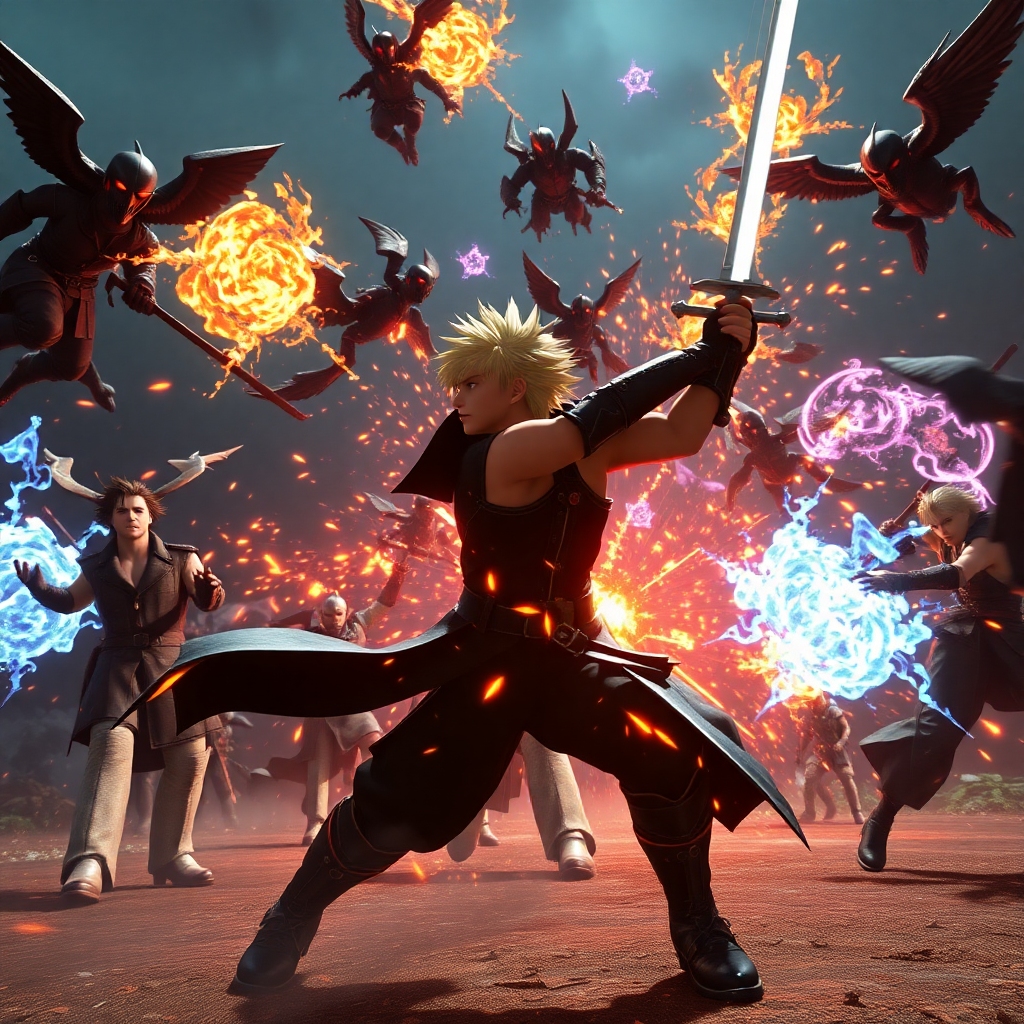
The legacy of Final Fantasy Vii is undeniable, a sprawling saga that has captivated generations of gamers since its original release. Its narrative depth, unforgettable characters, and groundbreaking world-building cemented its status as an RPG masterpiece. With the release of *Final Fantasy VII Rebirth*, the second installment in the ambitious remake project, fans are once again diving deep into Midgar’s sprawling aftermath and the vast world beyond. As players embark on this epic journey on the PlayStation 5, a critical question arises: how does this visually stunning and technically demanding title perform?
This comprehensive analysis delves into the intricate performance aspects of *Final Fantasy VII Rebirth* on the PS5. We’ll examine its various graphics modes, dissect frame rate stability, evaluate visual fidelity, and explore the compromises made to deliver this expansive adventure. Understanding these technical details is key to appreciating the efforts behind bringing the world of Final Fantasy Vii to life in such breathtaking detail.
Unpacking Final Fantasy Vii Rebirth’s PS5 Performance Modes
Square Enix, like many developers leveraging the power of current-generation consoles, has offered players a choice between two distinct performance modes in *Final Fantasy VII Rebirth*. These modes are designed to cater to different player preferences: one prioritizing visual grandeur and the other aiming for smoother gameplay. Understanding the nuances of each is crucial for any player looking to optimize their experience with Final Fantasy Vii.
The primary options available are “Graphics Mode” and “Performance Mode.” Each comes with its own set of technical specifications, impacting everything from resolution and texture detail to the coveted frame rate. This choice often involves a trade-off, and *Final Fantasy VII Rebirth* is no exception, presenting players with a clear distinction in how the game feels and looks.
Graphics Mode: Visual Fidelity in Final Fantasy Vii
For players who prioritize stunning visuals and want to soak in every meticulously crafted detail of the game world, Graphics Mode is the default choice. This mode aims to deliver the highest possible graphical quality that the PlayStation 5 can render. It focuses on pushing resolution and visual effects to their limits, creating an incredibly immersive experience.
In Graphics Mode, *Final Fantasy VII Rebirth* typically targets a resolution of 4K (3840×2160 pixels) through a technique like checkerboard rendering or dynamic resolution scaling. This ensures that environmental textures, character models, and special effects appear incredibly sharp and detailed on compatible displays. The draw distance is extended, and intricate lighting and shadow effects are rendered with greater precision, enhancing the overall cinematic feel of the game’s world. However, this visual feast comes with a specific frame rate target: 30 frames per second (fps). While this frame rate is generally stable, keen-eyed players and technical analyses often report occasional dips, particularly in very busy areas or during intense combat sequences with numerous particle effects.
Performance Mode: Chasing 60fps in Final Fantasy Vii
Conversely, Performance Mode is designed for those who value fluid movement and responsive controls above all else. This mode makes certain visual concessions to achieve a higher, more consistent frame rate, typically targeting 60 frames per second. The difference in responsiveness between 30fps and 60fps can be quite significant, especially in action-oriented combat systems like that of *Final Fantasy VII Rebirth*.
To achieve the higher frame rate, Performance Mode typically scales down the rendering resolution. In *Final Fantasy VII Rebirth*, this often means a resolution around 1440p (2560×1440 pixels) that is then upscaled to 4K for display. While still looking good, this reduction in native resolution can lead to a softer image, which some players perceive as “blurry.” Anti-aliasing solutions are employed to mitigate jagged edges, but the overall crispness is noticeably reduced compared to Graphics Mode. Frame rate stability in Performance Mode is generally good, often hovering close to 60fps, but it’s not without its challenges. Intense combat, particularly involving Summons or large groups of enemies, can cause drops into the 40-50fps range. The game does support Variable Refresh Rate (VRR) displays, which can help smooth out these minor fluctuations for compatible TVs, offering a more consistent experience for those with the right hardware. Despite the visual trade-offs, the enhanced fluidity in Performance Mode can make combat feel significantly more engaging and precise for many fans of Final Fantasy Vii.
Frame Rate Tests and Real-World Scenarios in Final Fantasy Vii
Beyond theoretical targets, real-world performance is what truly matters. Technical experts and players alike have conducted extensive frame rate tests across various scenarios within *Final Fantasy VII Rebirth* to understand how the game truly holds up under pressure. These tests reveal the strengths and weaknesses of each performance mode and highlight specific areas where the game’s engine is pushed to its limits.
Analyses often involve detailed frame-time graphs and side-by-side comparisons, similar to the methodology employed by reputable sources like Digital Foundry. These tests scrutinize everything from bustling cityscapes to vast open-world plains and the most chaotic boss battles. The findings provide valuable insights for players deciding which mode best suits their playstyle and visual preferences when exploring the expansive world of Final Fantasy Vii.
Combat Encounters and Open-World Exploration
Combat is a core pillar of *Final Fantasy VII Rebirth*, and its performance during these intense sequences is paramount. In Graphics Mode, while the 30fps target generally holds, complex battles involving multiple enemies, numerous particle effects from spells and abilities, and dynamic camera movements can sometimes lead to noticeable, albeit brief, drops. These dips, though minor, can occasionally impact the feeling of responsiveness during critical dodges or parries.
Performance Mode generally shines in combat, maintaining a much higher frame rate. However, even here, the most graphically demanding abilities or boss mechanics can cause the frame rate to dip into the low 50s or even upper 40s in extreme cases. This is particularly true during moments when powerful Summons are unleashed or when multiple characters are executing their Limit Breaks simultaneously. Open-world exploration, while generally smoother, also presents challenges. Traversing vast landscapes at high speeds on Chocobos, especially through areas with dense foliage or numerous environmental assets, can sometimes trigger minor frame rate instability in both modes, though it’s less pronounced than in combat. The scale of the world of Final Fantasy Vii truly tests the PS5’s capabilities.
Loading Times and PS5’s SSD Advantage
One area where *Final Fantasy VII Rebirth* unequivocally benefits from the PlayStation 5’s hardware is loading times. Thanks to the console’s ultra-fast custom SSD, transitions between major areas, fast travel, and reloading after a game over are remarkably swift. What would have been lengthy loading screens on previous generations are now often mere seconds, significantly reducing downtime and keeping players immersed in the narrative.
This rapid data retrieval is crucial for a game as expansive and detailed as *Final Fantasy VII Rebirth*. It allows for seamless transitions between cutscenes and gameplay, and quick access to various regions of the world map. This technological leap dramatically improves the overall player experience, ensuring that the flow of the story and exploration of Final Fantasy Vii remains uninterrupted.
The Visual Compromises and Player Experience in Final Fantasy Vii Rebirth
Ultimately, the choice between Graphics Mode and Performance Mode in *Final Fantasy VII Rebirth* comes down to personal preference and what aspects of the game experience a player values most. Both modes offer a visually stunning rendition of the world of Final Fantasy Vii, but they achieve this through different technical pathways.
Players with large 4K displays who prefer a more cinematic, visually rich experience might lean towards Graphics Mode, accepting the 30fps cap for the sake of crispness and detail. Those who prioritize responsive gameplay, especially in the action-heavy combat, and have a high-refresh-rate display (ideally with VRR), will likely find Performance Mode more appealing, even with the slightly softer image. Square Enix has done a commendable job in offering these choices, acknowledging the diverse preferences of their player base. While some minor frame rate fluctuations persist in both modes, particularly in demanding scenarios, the overall technical foundation for *Final Fantasy VII Rebirth* on the PS5 is robust, delivering a compelling and largely stable experience.
It’s also worth noting that developers often release post-launch patches to further optimize performance. Players should always ensure their game is updated to the latest version to benefit from any subsequent improvements. The ongoing commitment to refining the experience ensures that the epic journey through the world of Final Fantasy Vii remains as enjoyable as possible.
Conclusion: The Technical Triumph of Final Fantasy Vii Rebirth
*Final Fantasy VII Rebirth* stands as a monumental achievement, expanding upon the beloved narrative of Final Fantasy Vii with breathtaking scope and detail. On the PlayStation 5, the game offers a compelling, albeit nuanced, technical experience. Whether you prioritize the stunning visual fidelity of Graphics Mode or the fluid responsiveness of Performance Mode, Square Enix has delivered a title that largely meets the demands of modern gaming.
While neither mode achieves absolute perfection in frame rate stability, the overall presentation and performance are excellent, allowing players to fully immerse themselves in Cloud, Tifa, Aerith, Barret, and Red XIII’s grand adventure. The lightning-fast loading times, courtesy of the PS5’s SSD, are a particular highlight, ensuring that the epic journey remains seamless and engaging. For a game of this scale and ambition, the technical execution is a testament to the developers’ dedication.
Are you ready to experience the next chapter of this legendary saga? Dive into *Final Fantasy VII Rebirth* and decide for yourself which performance mode best enhances your journey through the unforgettable world of Final Fantasy Vii. Share your thoughts on your preferred mode and what aspects of the game’s performance stand out to you in the comments below!



Leave a Comment