
Nvidia Geforce Rtx: The Ultimate Gaming Power

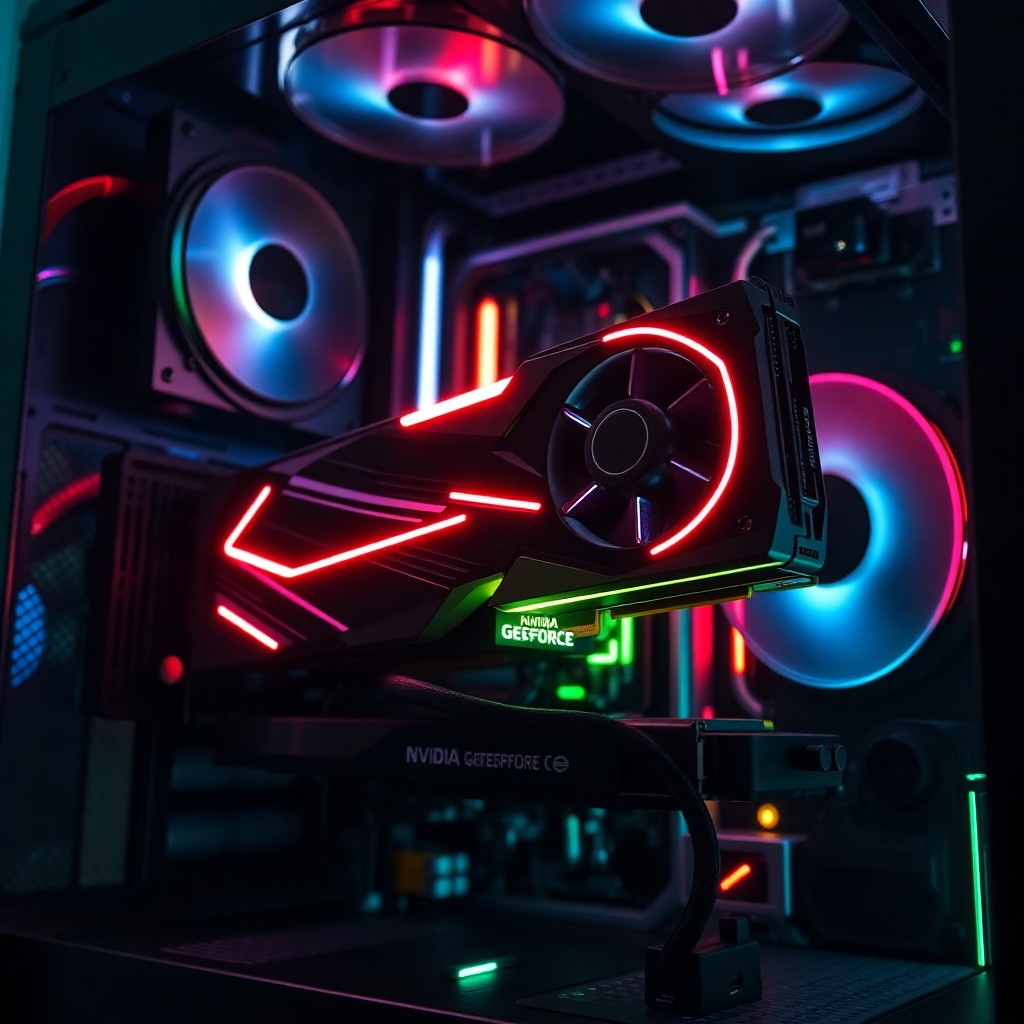
Welcome, gaming enthusiasts and tech aficionados! The world of PC gaming is always on the cusp of the next big leap, and few names ignite as much excitement as Nvidia. For years, the Nvidia Geforce Rtx series has redefined what’s possible in gaming graphics, pushing boundaries with real-time ray tracing and AI-powered upscaling. Now, the rumor mill is churning at an unprecedented pace, focused squarely on what could be the most anticipated graphics card in recent memory: the NVIDIA GeForce RTX 5090.
Whispers, leaks, and educated guesses are painting a picture of a GPU that promises to be nothing short of revolutionary. If the early indications are anything to go by, the next flagship from Nvidia will not only set new benchmarks but fundamentally alter our expectations for high-fidelity gaming and professional applications. Get ready to dive deep into the leaked specifications and potential release window of the NVIDIA GeForce RTX 5090, a card poised to become the ultimate gaming power and a testament to the continuous innovation of the Nvidia Geforce Rtx legacy.
The Dawn of Blackwell: A New Era for Nvidia Geforce Rtx
At the heart of any new GPU generation lies a foundational architectural leap. For the RTX 50 series, all signs point to Nvidia’s next-generation “Blackwell” architecture. This successor to the highly successful Ada Lovelace architecture (found in the RTX 40 series) is expected to bring significant advancements across the board, setting a new standard for the Nvidia Geforce Rtx lineup.
Blackwell is rumored to introduce a modular design, potentially allowing for greater scalability and efficiency. This could mean a more optimized use of silicon, leading to higher transistor counts and improved performance per watt. Such an architectural shift is crucial for handling the ever-increasing demands of modern game engines and complex AI workloads, which the Nvidia Geforce Rtx series is increasingly tasked with.
Unprecedented Performance: Core Counts and Clock Speeds
The NVIDIA GeForce RTX 5090 is expected to feature a staggering increase in CUDA cores, the parallel processing units that are the backbone of Nvidia’s GPUs. Leaks suggest a potential jump well beyond the RTX 4090’s 16,384 cores, possibly nearing or even exceeding 24,000. Such a significant increase would translate directly into a massive boost in raw computational power, a hallmark of the premium Nvidia Geforce Rtx experience.
Alongside the core count, higher clock speeds are also anticipated, thanks to manufacturing process refinements. While specific clock frequencies remain speculative, a combination of more cores and faster clocks would deliver an exponential increase in frames per second, especially at demanding resolutions like 4K and beyond. This is precisely what gamers expect from a top-tier Nvidia Geforce Rtx flagship.
Early benchmarks, albeit unverified, hint at performance gains that could be anywhere from 50% to 70% over its predecessor in certain scenarios. These figures, if accurate, would represent one of the largest generational leaps in graphics performance seen in years. This would solidify the RTX 5090’s position as a true generational powerhouse for the Nvidia Geforce Rtx brand.
Memory and Bandwidth: Fueling the Nvidia Geforce Rtx Beast
To feed such a powerful GPU with data, a robust memory subsystem is absolutely critical. The NVIDIA GeForce RTX 5090 is widely expected to debut with GDDR7 memory, the next evolution in high-speed VRAM. GDDR7 promises significantly higher bandwidth compared to GDDR6X, which was already incredibly fast on the RTX 40 series.
Initial rumors suggest the RTX 5090 could feature up to 32GB of GDDR7 memory, running on an ultra-wide 512-bit memory interface. This combination would provide unprecedented memory bandwidth, potentially exceeding 1.5 TB/s. Such immense bandwidth is vital for handling the massive textures, complex geometries, and demanding ray tracing calculations that next-generation games will undoubtedly employ, further enhancing the Nvidia Geforce Rtx experience.
This memory configuration would not only benefit gaming but also professional applications like 3D rendering, video editing, and AI development, where large datasets and fast memory access are paramount. The commitment to cutting-edge memory technology is a clear indicator of Nvidia’s intent to keep the Nvidia Geforce Rtx series at the forefront of graphical computing.
AI and Ray Tracing: The Nvidia Geforce Rtx Advantage Amplified
One of the defining features of the Nvidia Geforce Rtx series has been its dedicated RT Cores for ray tracing and Tensor Cores for AI acceleration, particularly DLSS (Deep Learning Super Sampling). The RTX 5090 is expected to bring substantial upgrades to both.
Enhanced RT Cores for Hyper-Realistic Graphics
The Blackwell architecture is rumored to feature new and improved RT Cores, offering significantly faster ray tracing performance. This means more complex lighting, shadows, and reflections can be rendered in real-time with even greater fidelity and less performance overhead. Imagine games where every light source interacts with the environment with photographic realism, a vision the Nvidia Geforce Rtx series has been chasing since its inception.
These enhanced RT Cores will likely support new ray tracing algorithms and techniques, pushing the boundaries of visual immersion further than ever before. For gamers who prioritize the most realistic visual experiences, the RTX 5090 promises to deliver an unparalleled level of detail, cementing the Nvidia Geforce Rtx brand’s reputation for cutting-edge graphics.
DLSS 4.0 and AI Acceleration
With Blackwell, we can anticipate the introduction of DLSS 4.0, or a similar next-generation AI upscaling technology. This updated version is expected to leverage even more powerful Tensor Cores, potentially offering superior image quality, better performance scaling, and broader game integration. The Nvidia Geforce Rtx lineup has consistently pushed AI in graphics, and the RTX 5090 will be no exception.
The improvements in AI acceleration won’t stop at DLSS. Expect enhanced capabilities for AI-driven features within games, such as intelligent NPCs, procedural content generation, and even more sophisticated physics simulations. The synergy between raw power and intelligent processing is a core tenet of the Nvidia Geforce Rtx philosophy, and the RTX 5090 will exemplify this.
Power Consumption and Cooling: Managing the Beast
With such a significant leap in performance, concerns about power consumption are naturally arising. The NVIDIA GeForce RTX 5090 is rumored to have a very high Total Board Power (TBP), potentially exceeding 600W. This would necessitate robust power supply units and advanced cooling solutions, a common characteristic of flagship Nvidia Geforce Rtx cards.
Nvidia’s engineers are undoubtedly working on optimizing power efficiency within the Blackwell architecture. However, to unlock maximum performance, a certain level of power draw is inevitable. Expect custom cooling solutions from AIB partners to be even more elaborate, featuring massive heatsinks, multiple large fans, and potentially liquid cooling options to keep temperatures in check. Maintaining optimal thermal performance is key for consistent high performance from an Nvidia Geforce Rtx GPU.
For prospective owners, this means ensuring their current PC build can accommodate not only the physical size of the card but also its power requirements and cooling capabilities. Investing in a high-wattage, reputable PSU (e.g., 1000W+) will likely be a prerequisite for anyone looking to harness the full potential of the next Nvidia Geforce Rtx flagship.
Potential Release Window and Pricing: The Waiting Game
The question on everyone’s mind is, “When can I get my hands on one?” While specific dates are always under wraps, industry analysts and various leaks point to a potential release window for the NVIDIA GeForce RTX 5090 in late 2024 or early to mid-2025. This timing would align with Nvidia’s typical generational refresh cycle, giving ample time for the Blackwell architecture to mature.
As for pricing, expect the RTX 5090 to command a premium, reflecting its position as the ultimate flagship and the technological advancements it brings. The RTX 4090 launched at $1,599, and given the rumored performance uplift and potential manufacturing costs, the RTX 5090 could see a similar or even higher launch price. This is standard for the top-tier Nvidia Geforce Rtx models.
Availability might initially be limited, as is often the case with highly anticipated hardware launches. Savvy consumers will need to keep a close eye on official announcements and retailer stock. For those looking for slightly more accessible options, expect other cards in the Nvidia Geforce Rtx 50 series, such as the RTX 5080 and RTX 5070, to follow later, offering different price-to-performance ratios.
Conclusion: The Future of Gaming with Nvidia Geforce Rtx
The NVIDIA GeForce RTX 5090, if the leaks and rumors hold true, is shaping up to be a monumental leap forward in graphics technology. With the powerful Blackwell architecture, vastly increased CUDA core counts, cutting-edge GDDR7 memory, and enhanced AI/ray tracing capabilities, it promises to redefine high-fidelity gaming and accelerate professional workloads to unprecedented levels. The continuous evolution of the Nvidia Geforce Rtx brand ensures that gamers and creators alike will have access to the most advanced tools.
While power consumption will be a consideration, the sheer performance gains are expected to justify the demands for many enthusiasts. The potential late 2024 to mid-2025 release window gives us plenty to look forward to, and the anticipated premium price reflects its position at the pinnacle of graphical power. As we await official announcements from Nvidia, the excitement surrounding the RTX 5090 continues to build, promising an exhilarating future for gaming and computing with the next generation of Nvidia Geforce Rtx.
Are you ready for the next level of gaming? What are your thoughts on these leaked specifications? Share your predictions in the comments below! For more detailed comparisons with current-generation cards, explore our comprehensive review of the RTX 40 series. Stay tuned to tech news sites like AnandTech or Tom’s Hardware for the latest official updates.

Leave a Comment