
Ps5 Xbox Series: Which Console Wins?

Ps5 Xbox Series: Which Console Wins?
The console wars have raged for decades, captivating gamers and tech enthusiasts alike. In the current generation, the titans clashing are Sony’s PlayStation 5 and Microsoft’s Xbox Series X. Both consoles represent a significant leap forward in gaming technology, promising breathtaking visuals, lightning-fast load times, and immersive experiences. But when it comes to the nitty-gritty of “Latest Game Performance & Frame Rate Analysis,” which powerhouse truly reigns supreme? This comprehensive breakdown aims to dissect their capabilities, offering a detailed comparison to help you understand the nuances of the Ps5 Xbox Series rivalry.
Understanding the Ps5 Xbox Series Hardware Foundations
Before diving into specific game performance, it’s crucial to understand the architectural backbone of each console. While both feature custom AMD Zen 2 CPUs and RDNA 2 GPUs, there are subtle differences that can impact real-world performance. The Xbox Series X boasts a slightly more powerful GPU on paper, with 12 TFLOPS compared to the PS5’s 10.28 TFLOPS.
However, raw TFLOPS don’t tell the whole story. The PlayStation 5 utilizes a more agile, variable frequency system, allowing its GPU to boost to higher clock speeds when thermal conditions permit. This dynamic approach can sometimes narrow the theoretical performance gap. Both consoles also feature incredibly fast custom SSDs, fundamentally changing how games are designed and experienced, virtually eliminating traditional loading screens. The Ps5 Xbox Series share a commitment to speed, but their implementations vary.
CPU and GPU: A Closer Look at the Ps5 Xbox Series Power
The CPU in both consoles runs at similar clock speeds, with the Xbox Series X having a slight edge at 3.8 GHz (or 3.66 GHz with SMT) compared to the PS5’s 3.5 GHz (with SMT). While this difference is marginal, it can contribute to overall system responsiveness in CPU-intensive scenarios. The GPU, as mentioned, is where the primary theoretical difference lies.
The Xbox Series X’s 52 Compute Units (CUs) operating at 1.825 GHz theoretically offer more processing power than the PS5’s 36 CUs at a variable 2.23 GHz. However, the PS5’s higher clock speed allows it to achieve similar or even superior performance in certain titles, demonstrating that optimization plays a monumental role. This dynamic performance profile is a key aspect of the Ps5 Xbox Series comparison.
Latest Game Performance: Resolution and Frame Rate on Ps5 Xbox Series
The ultimate test of any console lies in how it runs the latest and most demanding games. Developers often target specific resolutions and frame rates, offering different graphical modes such as “Fidelity” (higher resolution, often 30fps) and “Performance” (lower resolution, often 60fps). The goal for both the Ps5 Xbox Series is to deliver a smooth, visually stunning experience.
In many cross-platform titles, the performance difference between the Ps5 and Xbox Series X is often negligible, with both consoles delivering excellent results. However, detailed analysis by tech outlets like Digital Foundry reveals subtle advantages for one console over the other in specific titles, which can fluctuate with patches and optimization efforts.
Cross-Platform Showdowns: Where the Ps5 Xbox Series Stand
Let’s examine some prominent cross-platform titles and how they perform on both consoles:
-
Cyberpunk 2077 (Next-Gen Update): After numerous updates, Cyberpunk 2077 runs remarkably well on both. In its “Performance” mode, both consoles target 60fps, often hovering around that mark with dynamic resolution scaling. The “Ray Tracing” mode sees both drop to 30fps, with the Xbox Series X sometimes showing a slightly more stable frame rate in highly dense areas, though the PS5 often achieves a slightly higher average resolution. This title truly pushed the limits of the Ps5 Xbox Series.
-
Alan Wake 2: A visually stunning and demanding title, Alan Wake 2 offers a “Quality” mode (targeting 30fps with ray tracing) and a “Performance” mode (targeting 60fps without full ray tracing, or with a more limited implementation). Both consoles deliver a fantastic experience, with frame rates generally stable in their respective modes. The visual fidelity on both the Ps5 Xbox Series is breathtaking, making it a true next-gen showcase.
-
Call of Duty: Modern Warfare III: For fast-paced shooters, consistent high frame rates are paramount. Both the PS5 and Xbox Series X typically achieve 120fps in multiplayer modes with dynamic resolution scaling, ensuring a fluid experience. In campaign modes, 60fps is largely maintained. The performance parity here is excellent, highlighting the robust capabilities of both the Ps5 Xbox Series for competitive gaming.
-
Forza Motorsport: As an Xbox exclusive, Forza Motorsport showcases the Series X’s power. It offers various modes, including a 60fps performance mode with ray tracing enabled during gameplay, a feat few games achieve. The visual fidelity and smooth frame rates are a testament to the console’s optimization for its first-party titles. While not directly comparable to a PS5 exclusive, it sets a high bar.
In many scenarios, the differences are so minor that only side-by-side comparisons or frame rate analysis tools can discern them. For the average player, both the Ps5 Xbox Series deliver an exceptional gaming experience in these titles.
Frame Rate Stability and Ray Tracing Implementation
Frame rate stability is crucial for a smooth gaming experience. While a console might target 60fps, consistent dips can be more jarring than a locked 30fps. Both the Ps5 Xbox Series have made significant strides in maintaining stable frame rates, especially in their performance modes.
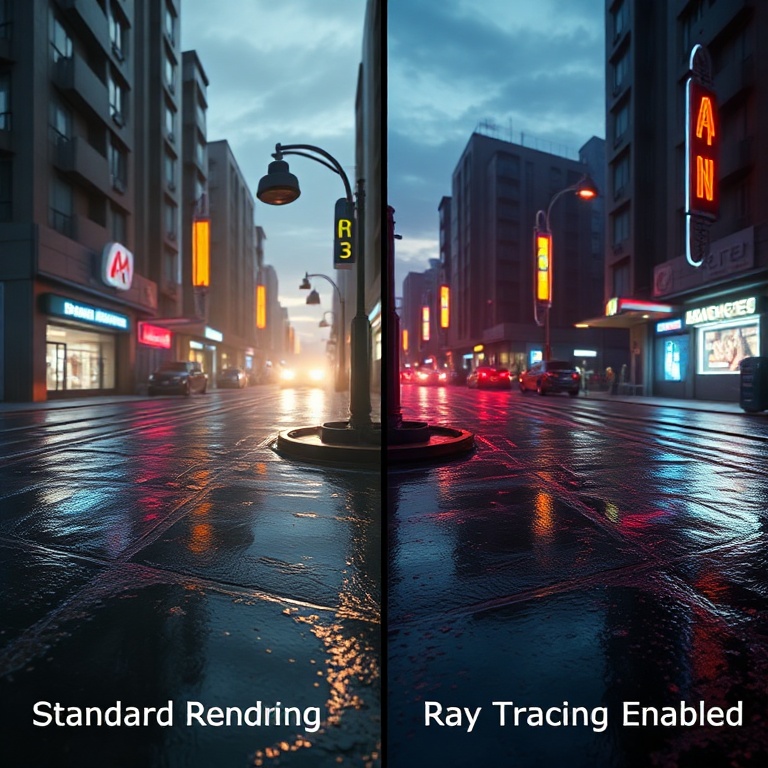
Ray tracing, the holy grail of realistic lighting, reflections, and shadows, is a demanding feature. While both consoles support hardware-accelerated ray tracing, its implementation varies widely by game. Often, enabling full ray tracing means sacrificing resolution or frame rate, typically resulting in a 30fps cap. Some games offer hybrid solutions, using ray tracing for specific effects like shadows or ambient occlusion, balancing visual fidelity with performance.
Exclusive Titles: A Key Differentiator for Ps5 Xbox Series
While cross-platform performance is often similar, exclusive titles are where each console can truly flex its muscles, as developers can optimize specifically for that hardware. This is where the Ps5 Xbox Series debate often heats up.
PlayStation 5 Exclusives:
-
Marvel’s Spider-Man 2: This title is a technical masterpiece, offering multiple graphical modes, including a “Fidelity” mode at 30fps with full ray tracing and a “Performance” mode at 60fps, also with ray tracing (albeit with some compromises). The game leverages the PS5’s SSD for seamless traversal across its open world and incredibly fast loading. The visual detail and fluid combat are exemplary, showcasing the console’s prowess.
-
God of War Ragnarök: Another stunning exclusive, Ragnarök offers a plethora of performance options, including 40fps modes for high refresh rate displays, 60fps performance modes, and a 30fps fidelity mode. The game’s intricate environments and character models push the graphical boundaries, maintaining excellent frame rates across its various settings. It’s a prime example of the Ps5 Xbox Series’s capability in exclusive titles.
Xbox Series X Exclusives:
-
Starfield: Bethesda’s expansive RPG runs at a locked 30fps on both the Xbox Series X and Series S. While some players desired a 60fps option, the game’s massive scope, detailed environments, and complex systems contribute to this design choice. The visual quality is impressive, showcasing vast alien landscapes and intricate starship interiors. This demonstrates a different approach to performance on the Ps5 Xbox Series platforms.
-
Halo Infinite: The multiplayer component of Halo Infinite offers a 120fps performance mode on the Series X, delivering an incredibly smooth and responsive experience for competitive play. The campaign also runs very well, targeting 60fps with consistent performance. It’s a strong showcase for the Series X’s ability to handle high frame rate shooters.
These exclusives highlight how developers can extract maximum performance when focusing on a single platform. The decision between a Ps5 Xbox Series can often come down to which console’s exclusive game library appeals more to a player.
Storage Solutions and Load Times: A Game Changer for the Ps5 Xbox Series
Both the PlayStation 5 and Xbox Series X feature incredibly fast custom SSDs, fundamentally transforming the gaming experience. The PS5’s SSD boasts a raw throughput of 5.5 GB/s, while the Xbox Series X’s SSD offers 2.4 GB/s. However, Microsoft’s Velocity Architecture includes hardware decompression, which can effectively boost its read speeds to 4.8 GB/s for compressed assets.
In practice, this means near-instantaneous loading times for many games, eliminating the long waits that plagued previous generations. Fast travel is truly fast, and level streaming is seamless. While the PS5 technically has a faster raw SSD, both consoles offer such a dramatic improvement over traditional HDDs that the real-world difference in load times between them is often negligible for most titles. This advancement is a universal win for the Ps5 Xbox Series generation.
Expandable Storage: Practical Considerations
Both consoles offer expandable storage options. The PS5 uses NVMe M.2 SSDs that meet specific speed requirements, allowing users to install off-the-shelf drives. The Xbox Series X, on the other hand, uses proprietary expansion cards developed in partnership with Seagate, which are plug-and-play but generally more expensive than comparable M.2 drives. This is a practical consideration when choosing between the Ps5 Xbox Series for long-term storage needs. For more details on compatible storage, consult official PlayStation and Xbox guides.
Audio Technology: Immersion Beyond Visuals
Beyond graphics and frame rates, audio technology plays a vital role in immersion. The PlayStation 5 features the Tempest 3D AudioTech engine, designed to deliver highly realistic and spatial audio through headphones and, increasingly, TV speakers. This dedicated hardware allows for hundreds of sound sources to be processed independently, creating a truly three-dimensional soundscape.
The Xbox Series X leverages spatial audio standards like Dolby Atmos and DTS Headphone:X, providing excellent surround sound capabilities. While not a dedicated audio chip like the PS5’s Tempest, the Series X’s approach is highly effective and widely supported. Both consoles offer incredible audio experiences, enhancing gameplay through precise sound cues and atmospheric immersion. This aspect of the Ps5 Xbox Series experience is often overlooked but incredibly impactful.
Conclusion: Which Console Wins the Ps5 Xbox Series Battle?
After a thorough analysis of “Latest Game Performance & Frame Rate Analysis,” it’s clear that both the PlayStation 5 and Xbox Series X are exceptional gaming machines. There isn’t a single, definitive “winner” in every category; rather, each console demonstrates strengths in different areas.
The Xbox Series X often boasts a slight theoretical edge in raw GPU power, which can translate to marginally more stable frame rates or higher average resolutions in some demanding cross-platform titles. Its commitment to ecosystems like Game Pass also offers incredible value. The PlayStation 5, with its custom SSD and variable frequency GPU, often keeps pace or even surpasses the Series X in specific scenarios, particularly in its highly optimized first-party exclusives like Spider-Man 2, which leverage its unique architecture to great effect. The Tempest 3D AudioTech is also a standout feature for immersion. The Ps5 Xbox Series debate is truly a close call.
For the vast majority of cross-platform games, the performance difference between the Ps5 Xbox Series is so minimal that it won’t be noticeable during gameplay. Your decision will likely come down to several factors: exclusive game libraries, preferred controller (DualSense haptics vs. Xbox’s ergonomic design), ecosystem preferences (Game Pass vs. PlayStation Plus), and personal brand loyalty. Both consoles deliver a phenomenal next-generation gaming experience, pushing boundaries in visual fidelity, speed, and immersion.
Ultimately, whichever console you choose, you’re in for an incredible gaming journey. We encourage you to weigh your personal priorities and dive into the world of next-gen gaming. What are your thoughts on the Ps5 Xbox Series performance? Share your experiences in the comments below!


Leave a Comment