
Stellaris: Master the Galaxy


The cosmos beckons once more, and for fans of grand strategy, the arrival of Stellaris Odyssey (2026) for PC has been one of the most anticipated events in recent memory. After years of refinement and expansion, Paradox Development Studio promised a truly generational leap, and as we dive into the first crucial hours, the initial impressions are nothing short of monumental. This latest iteration promises to redefine spacefaring empires, intricate diplomacy, and the relentless march of technological progress, cementing its place as a titan among 4X games. Our comprehensive review will cover the launch experience and provide an essential guide to navigate your first 10 hours, ensuring your nascent empire thrives in the unforgiving galaxy of Stellaris.
Stellaris Odyssey (2026) PC Launch Impressions
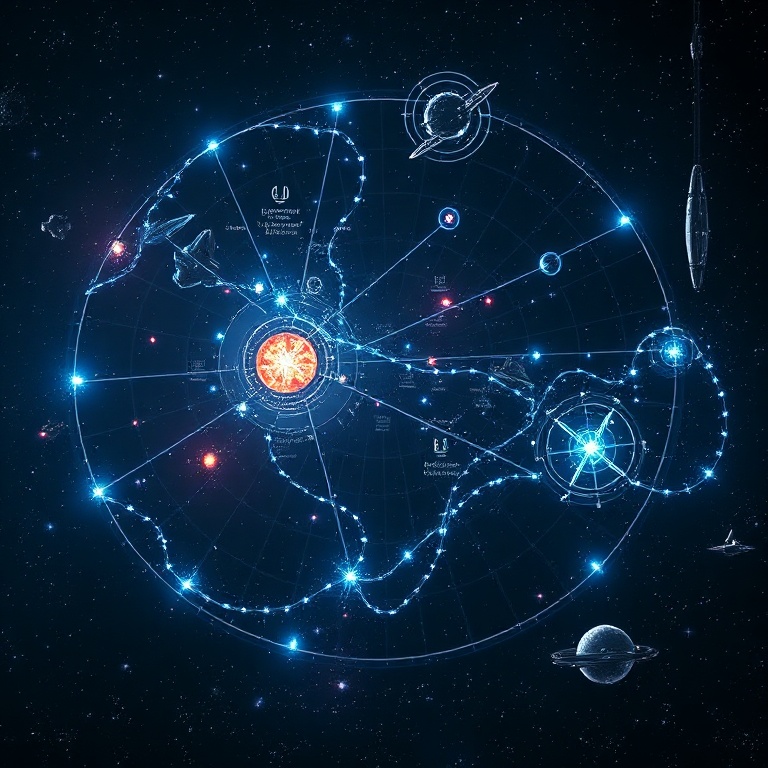
The hype surrounding Stellaris Odyssey was immense, and thankfully, the launch has largely delivered. From the moment the main menu loads, it’s clear that this isn’t just another expansion; it’s a significant evolution. The visual overhaul is immediately apparent, with stunning nebulae, vibrant star systems, and highly detailed ship models that bring the galactic map to life in ways previously unimaginable.
Visual Fidelity and Immersion in Stellaris
One of the most striking aspects of Odyssey is its graphical fidelity. Star systems pulse with newfound energy, and the individual planets, once mere textures, now showcase dynamic weather patterns, city lights that truly sprawl, and even subtle atmospheric effects. Battles are more cinematic than ever, with improved particle effects for weapon fire and explosions that feel genuinely impactful. This enhanced visual layer significantly deepens the immersion, making every exploration and conflict feel more momentous.
Performance and Stability at Launch
Historically, Paradox launches can be a mixed bag regarding performance, especially with the scale of their games. However, Stellaris Odyssey has launched with remarkable stability. While high-end systems will naturally reap the full benefits of the graphical enhancements, optimization appears to have been a priority. Frame rates remain consistent even in late-game scenarios with numerous empires and fleets, a testament to the new engine optimizations. Minor bugs are present, as expected with any large-scale release, but nothing game-breaking has surfaced in our initial playthroughs.
UI/UX Enhancements and Quality of Life
Beyond the graphical facelift, the user interface (UI) and user experience (UX) have received a thoughtful overhaul. Menus are more intuitive, information is presented more clearly, and several quality-of-life improvements streamline empire management. The new ‘Galactic Chronicle’ feature, for instance, provides a dynamic timeline of your empire’s history, making it easier to track your progress and decisions. These subtle but impactful changes make the complex mechanics of Stellaris more accessible to new players while still offering depth for veterans.
First 10 Hours Guide: Your Initial Steps in Stellaris Odyssey
The initial hours in Stellaris are crucial. They lay the foundation for your empire’s entire trajectory, determining your economic strength, technological prowess, and diplomatic standing. Rushing into decisions without a clear strategy can lead to significant setbacks. This guide will help you establish a strong foothold in the vast unknown.
Initial Empire Creation and Ethics in Stellaris
Before you even begin, your empire creation choices are paramount. Consider your chosen ethics carefully, as they dictate available civics, diplomatic options, and even research paths. For beginners, a Fanatic Materialist or Fanatic Egalitarian empire often provides a strong start due to their bonuses to research or resource production. Pair these with a strong economic civic like “Meritocracy” or “Technocracy” to maximize your early game potential. Remember, your starting empire defines your initial playstyle in Stellaris.
Early Exploration and Expansion
Your science ships are your eyes and ears in the early game. Prioritize building at least two additional science ships immediately after starting. Assign one to survey nearby systems, and the others to explore outwards. Rapid expansion is key to securing valuable resources and chokepoints. Aim to colonize at least two to three additional planets within the first 20-30 years, focusing on those with high habitability and valuable resource deposits. Don’t forget to build starbases on strategic chokepoints to secure your borders.
Research Priorities for Your Stellaris Empire
Research is the engine of progress in Stellaris. In the first 10 hours, focus on technologies that directly boost your economy and exploration. Prioritize “Colonial Centralization” for increased colony development, “Mineral Processing” and “Energy Grid” to enhance resource output, and “Hyperspace Travel” upgrades for faster exploration. Don’t neglect defensive technologies, but economic and expansion techs should take precedence initially. Efficient research management will set you apart.
Diplomacy and First Contacts in Stellaris Odyssey
The galaxy of Stellaris is rarely empty. Sooner or later, you’ll encounter other empires. Your first contact protocol is crucial. Be cautious but open. Send an envoy to establish communications quickly to gauge their ethics and potential relationships. Avoid making immediate enemies unless your empire is specifically designed for aggressive expansion. Look for opportunities to establish research agreements or trade deals, which can provide significant early game boosts. Understanding the diplomatic landscape is vital for long-term survival.
Economy and Resource Management
Your economy is the backbone of your empire. In the early game, focus heavily on balancing your three primary resources: Minerals, Energy Credits, and Food. Ensure you have a positive income for all three. Build mining stations and research labs on planets and in systems you control. Don’t over-specialize too early; a balanced economy allows for flexibility. Always keep an eye on your population growth and job availability, ensuring that your pops have work and contribute to your resource output. A stable economy will fuel your expansion and research in Stellaris.
Military Foundations and Defense
While diplomacy is important, a strong military deterrent is essential in Stellaris. Build a small, but capable, fleet early on. Focus on corvettes initially, as they are cheap and quick to build. Upgrade your starbases at key chokepoints with defensive modules like missile batteries and hangars. This will deter early game aggressors and buy you time if a conflict arises. Remember, a powerful fleet doesn’t just win wars; it prevents them. Never underestimate the importance of defense in Stellaris Odyssey.
Deeper Dive into Stellaris Odyssey Mechanics
Stellaris Odyssey introduces several new and refined mechanics that significantly alter the gameplay loop. Understanding these additions is key to mastering the galaxy beyond your first 10 hours.
The Evolving Galactic Market
The Galactic Market has been revamped in Odyssey, becoming a more dynamic and impactful entity. Prices fluctuate based on galactic supply and demand, influenced by major events, crises, and even the collective economic output of participating empires. Learning to play the market, buying low and selling high, or strategically stockpiling rare resources can provide a powerful economic advantage. It adds another layer of strategic depth to resource management within Stellaris.
Advanced Megastructure Construction
Megastructures, long a hallmark of advanced empires, have received new options and an expanded tech tree. Beyond the classic Dyson Spheres and Ring Worlds, Odyssey introduces several new megastructures, each with unique benefits and construction challenges. These include advanced research arrays that span entire systems or orbital shipyards capable of assembling fleets at unprecedented speeds. Planning for these colossal projects from the mid-game onwards can drastically alter your empire’s power projection and end-game capabilities in Stellaris.
New Crisis Mechanics and End-Game Challenges
The end-game crises in Stellaris Odyssey are more varied and unpredictable than ever. New crisis types, some tied to specific player actions or galactic events, ensure that even veteran players will face fresh challenges. These crises are designed to test every aspect of your empire, from your military might to your economic resilience and diplomatic acumen. Preparing for these inevitable threats requires foresight and a robust, adaptable strategy throughout your entire playthrough.
Tips for Mastering Stellaris Early Game
Beyond the specific steps, some general principles will help you excel in the early game of Stellaris.
- Don’t Be Afraid to Restart: The galaxy generation is random. If your starting system or immediate neighbors are unfavorable, a quick restart can save you hours of struggle.
- Specialize Your Planets: Once you have a few colonies, designate them for specific purposes (e.g., a mining world, a research world, an industrial world). This improves efficiency and resource output.
- Utilize Edicts: Edicts can provide powerful temporary buffs. Use them strategically to boost research, resource production, or fleet capacity when needed.
- Scout Aggressively: Knowing what’s around you – valuable resources, hostile empires, or ancient relics – is invaluable for planning your expansion and defense.
- Manage Your Leaders: Good leaders provide significant bonuses. Assign them to appropriate roles (scientists for science ships, governors for planets, admirals for fleets) and level them up.
Conclusion: Your Journey to Master Stellaris
Stellaris Odyssey (2026) represents a significant leap forward for the acclaimed grand strategy series. Its stunning visual enhancements, refined UI, and robust performance provide a truly immersive experience right from launch. The initial 10 hours are a critical period, demanding careful planning in empire creation, aggressive yet strategic exploration and expansion, balanced economic management, and a watchful eye on both research and defense. By following this guide, you’ll be well-equipped to establish a thriving empire, ready to face the myriad challenges and opportunities the galaxy of Stellaris presents. Your journey to master the stars begins now. Dive in, explore the unknown, and carve out your legacy. What kind of empire will you build in Stellaris Odyssey?




Leave a Comment