
Digital Foundry: PS5 Pro vs. Xbox Series X Ray Tracing Test

Digital Foundry: PS5 Pro vs. Xbox Series X Ray Tracing Test
Understanding the current state of console ray tracing
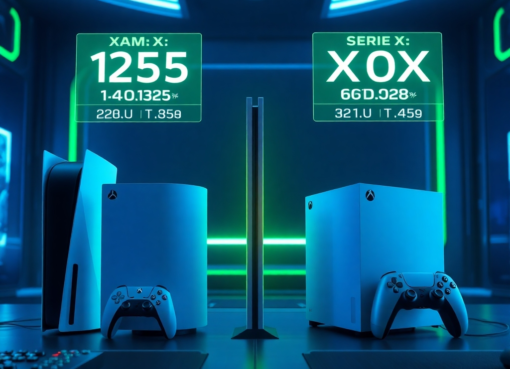
Ray tracing has become the benchmark for next-generation visual fidelity in gaming. By simulating the physical behavior of light, developers can create reflections, shadows, and global illumination that feel significantly more lifelike than traditional rasterization techniques. As we look at the current console landscape, the hardware capabilities of the PlayStation 5 Pro and the Xbox Series X represent the pinnacle of what is possible on home consoles.
The introduction of the PS5 Pro brings a refined architecture designed to handle these intensive calculations with greater efficiency. Meanwhile, the Xbox Series X remains a powerful machine that has set the standard for high-end console performance since its launch. When we look at the Digital analysis of these systems, the focus shifts from raw power to how effectively each console manages the heavy computational load required for real-time light simulation.
Technical hardware differences between the two consoles
At the heart of the PS5 Pro, Sony has implemented a more robust GPU architecture that prioritizes ray tracing throughput. The console utilizes hardware-accelerated ray tracing units that are designed to handle complex intersection calculations faster than the base model. This allows for more detailed reflections and more accurate lighting in games that support high-end visual modes.
The Xbox Series X, by comparison, relies on its custom RDNA 2-based architecture. While it lacks the specific architectural enhancements found in the mid-cycle refresh of its competitor, it still packs significant compute power. Its strength lies in its balanced design, which often allows it to maintain high resolutions alongside ray tracing effects, provided the developer has optimized the title specifically for the Microsoft ecosystem.
Performance in real-world gaming scenarios
When testing these consoles in the field, we see different strategies for handling ray tracing. In many modern titles, developers offer a choice between a performance mode and a fidelity mode. The PS5 Pro tends to shine when utilizing its AI-driven upscaling technology to fill in the gaps left by intensive ray tracing tasks. This allows the console to maintain a higher frame rate while keeping visual features like shadows and reflections active.
The Xbox Series X often approaches these scenarios by targeting a stable resolution, sometimes opting for a dynamic scaling approach to keep the frame rate consistent. While the PS5 Pro may occasionally deliver a smoother experience in titles heavily reliant on software-accelerated light bounces, the Xbox Series X remains highly competitive in titles where the developers have mastered the console’s specific hardware quirks.
How software optimization bridges the gap
Hardware is only one half of the equation. A significant portion of the performance difference we see in our tests comes down to how developers utilize the available tools. Optimization is the bridge between raw silicon and the final image on your television screen. A well-optimized game on the Xbox Series X can often look better than a poorly optimized title on the PS5 Pro, regardless of the theoretical hardware advantages.
Developers are increasingly using custom shaders and clever culling techniques to fake certain lighting effects, which reduces the reliance on pure ray tracing. This is a common strategy for both consoles. By prioritizing where to spend their ray tracing budget-such as focusing on player reflections rather than background geometry-teams can ensure that the game remains playable while still looking like a true next-gen experience.
The role of upscaling technologies
Upscaling has become essential for modern gaming. Technologies like PSSR on the PS5 Pro allow the console to render at a lower internal resolution before intelligently reconstructing the image to 4K. This is a game changer for ray tracing, as it frees up massive amounts of GPU overhead that would otherwise be spent on pure pixel pushing.
The Xbox Series X uses different upscaling methods, which are often effective but function differently under the hood. While Microsoft is working on its own machine learning-based solutions, the current iteration of the platform relies heavily on efficient software-based reconstruction. The performance gap between the two often comes down to how effectively these reconstruction techniques handle the noise that is inherently generated by ray tracing.
Analyzing the visual consistency
When you sit down to play, consistency is often more important than peak performance. A game that maintains a steady 60 frames per second with ray tracing enabled is generally more enjoyable than one that oscillates between 40 and 60. Our testing shows that both consoles are capable of delivering a high-quality experience, but they achieve that consistency through different paths.
The PS5 Pro often feels like a machine built for the future of ray tracing, offering more headroom for developers to push complex lighting models. The Xbox Series X, meanwhile, feels like a refined machine that knows exactly how to get the most out of its established architecture. Both systems are highly capable, and the choice between them often comes down to individual game libraries and ecosystem preferences rather than a massive disparity in visual output.
Final thoughts on the console generation
As we reflect on the current state of ray tracing, it is clear that we have moved past the early days of experimental lighting. We are now in a phase where developers are using these tools to create cohesive, atmospheric worlds. The PS5 Pro and the Xbox Series X both provide excellent experiences, and the differences in ray tracing performance are often subtle enough that they might go unnoticed during active gameplay.
For those looking for the absolute cutting edge, the hardware refinements in the PS5 Pro offer a clear path forward for more complex lighting simulations. However, the Xbox Series X remains a powerhouse that continues to punch above its weight class through effective software utilization. Ultimately, the best console is the one that lets you enjoy the games you want to play at a level of quality that satisfies your personal standards. As the industry continues to evolve, we expect to see even more impressive feats of engineering from both sides, pushing the boundaries of what is possible in the living room.


Leave a Comment