
Ps5 Xbox Series: The Ultimate Console Showdown

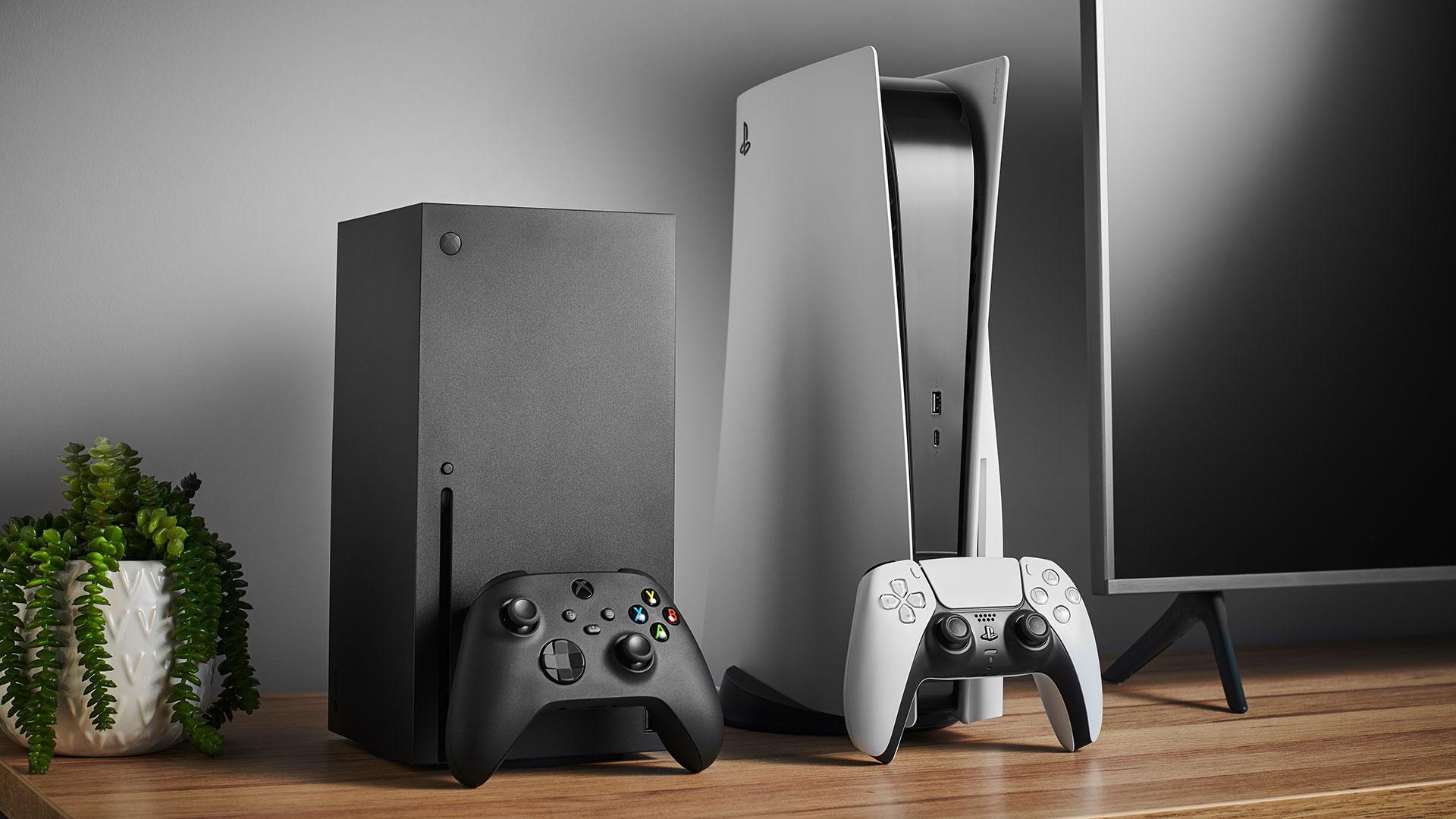
Welcome to the arena where digital titans clash! In the ever-evolving world of gaming, few debates ignite more passion than the ongoing rivalry between Sony’s PlayStation 5 and Microsoft’s Xbox Series X/S. Gamers constantly seek the ultimate experience, and a crucial metric in that pursuit is frame rate performance. This comprehensive analysis dives deep into how the Ps5 Xbox Series consoles stack up when rendering the latest and greatest titles, dissecting their performance to help you understand which machine delivers the smoothest, most responsive gameplay.
The quest for higher frame rates isn’t just about bragging rights; it directly impacts immersion, reaction time, and overall enjoyment. From buttery-smooth 120Hz action to stable 60 FPS experiences, understanding the nuances of how each console handles demanding games is vital. We’ll break down recent game performance, explore the underlying hardware, and examine the factors that contribute to the frame rate differences you might encounter when comparing the Ps5 Xbox Series in real-world scenarios.
Understanding Frame Rates: The Core of Ps5 Xbox Series Performance
Before we delve into specific game breakdowns, it’s essential to grasp what frame rate means and why it’s so important. Frame rate, measured in frames per second (FPS), refers to the number of individual images your console can render and display on your screen every second. A higher FPS count translates to smoother motion, more responsive controls, and a generally more fluid visual experience.
The current generation of consoles, including the Ps5 Xbox Series, targets various frame rate benchmarks: 30 FPS, 60 FPS, and even 120 FPS. While 30 FPS is often the minimum for a playable experience, 60 FPS is widely considered the sweet spot for action-oriented games, providing a significant leap in responsiveness. 120 FPS, often achieved at lower resolutions or with performance-focused modes, offers an incredibly smooth experience, particularly beneficial for competitive multiplayer titles.
Key Frame Rate Concepts for the Ps5 Xbox Series
Beyond raw FPS numbers, other technologies play a role. Variable Refresh Rate (VRR), supported by both the Ps5 Xbox Series, allows your display to dynamically adjust its refresh rate to match the console’s output, reducing screen tearing and input lag. Resolution also heavily impacts frame rate; rendering games at native 4K (2160p) is far more demanding than rendering at 1440p or 1080p, often necessitating a trade-off in frame rate.
The Powerhouses: PS5 and Xbox Series X/S Hardware
At the heart of any frame rate discussion lies the hardware. Both the PS5 and Xbox Series X boast powerful custom AMD RDNA 2 GPUs and Zen 2 CPUs, alongside ultra-fast SSDs that revolutionize loading times and asset streaming. The Xbox Series S, while part of the same generation, is designed as a more affordable, all-digital option, featuring a less powerful GPU primarily targeting 1440p resolution.
The PS5 and Xbox Series X are remarkably similar in theoretical compute power, with the Series X having a slight edge in GPU teraflops (12 TFLOPs vs. PS5’s 10.28 TFLOPs). However, raw TFLOPs don’t tell the whole story. Factors like memory bandwidth, architecture efficiency, and developer optimization play a crucial role in how these consoles perform in real-world gaming scenarios. This is where the Ps5 Xbox Series performance comparison gets interesting.
Ps5 Xbox Series: A Look at Cross-Platform Performance Trends
When comparing cross-platform titles, a general trend has emerged since the launch of the Ps5 Xbox Series. Often, the Xbox Series X and PS5 deliver very similar frame rate performance, with minor differences that can vary from game to game. The Xbox Series S, due to its lower GPU power, typically targets lower resolutions (like 1440p or 1080p) to maintain comparable frame rates to its more powerful siblings.
These performance variations are rarely drastic enough to be a deal-breaker for most gamers, but they can be noticeable to those with a keen eye for detail or high-refresh-rate displays. Developer choices in optimization, engine efficiency, and even specific rendering techniques can lead to one console having a slight edge in certain scenarios. Let’s dive into some specific examples of how the Ps5 Xbox Series perform with recent blockbusters.
Game-Specific Frame Rate Showdowns: Ps5 Xbox Series in Action
To provide a clear picture, we’ll examine performance across a selection of recent, graphically demanding titles. These examples highlight the typical frame rate targets and any notable disparities between the Ps5 Xbox Series consoles.
Call of Duty: Modern Warfare III Frame Rate Analysis
The latest installment in the popular shooter franchise, *Call of Duty: Modern Warfare III*, generally runs exceptionally well across all current-gen consoles. Both the PS5 and Xbox Series X offer a consistent 60 FPS experience in their standard modes, often pushing towards 120 FPS in performance modes on compatible displays. The Xbox Series S also aims for 60 FPS, typically at a lower resolution (around 1440p dynamic) to maintain fluidity. This title demonstrates excellent optimization across the Ps5 Xbox Series platforms, providing a smooth experience for competitive play.
Cyberpunk 2077: Ps5 Xbox Series Redemption Arc
*Cyberpunk 2077* has undergone a remarkable transformation, and its current-gen performance is a testament to that. Both the PS5 and Xbox Series X offer “Performance” modes targeting 60 FPS (often dynamic 4K) and “Ray Tracing” modes targeting 30 FPS (with enhanced visuals). In the 60 FPS performance modes, the Ps5 Xbox Series often deliver near-identical results, with occasional minor dips in extremely busy scenes. The Series S provides a solid 30 FPS experience in its quality mode and a smoother 60 FPS in its performance mode, albeit at a lower resolution.
Alan Wake 2: A Visual Marvel on Ps5 Xbox Series
*Alan Wake 2* is a visually stunning game, pushing the boundaries of current-gen graphics, particularly with its heavy use of ray tracing. On both the PS5 and Xbox Series X, the game offers a “Quality” mode (targeting 30 FPS with ray tracing) and a “Performance” mode (targeting 60 FPS with some visual compromises, including less intense ray tracing or dynamic resolution scaling). Digital Foundry analysis has shown that both consoles perform very similarly, with the 60 FPS mode generally holding up well, though with noticeable drops in particularly dense areas. This title truly tests the limits of the Ps5 Xbox Series hardware.
Forza Motorsport: Xbox Series X/S Exclusive Excellence
As an Xbox exclusive, *Forza Motorsport* showcases the Series X’s capabilities. It features various graphics modes, including a “Performance RT” mode that aims for 60 FPS with ray tracing on track during gameplay, and a “Quality” mode that targets 30 FPS with higher fidelity. The Xbox Series X excels here, delivering a consistently smooth racing experience. The Xbox Series S also provides a solid 60 FPS experience, though with expected visual reductions to maintain that frame rate. This title is a strong example of first-party optimization for the Ps5 Xbox Series ecosystem.
Marvel’s Spider-Man 2: PS5’s Web-Slinging Power
An exclusive showcase for the PS5, *Marvel’s Spider-Man 2* delivers a breathtaking open-world experience. The game offers “Fidelity” mode (30 FPS with ray tracing and higher graphical detail) and “Performance” mode (60 FPS, with dynamic resolution and slightly reduced ray tracing). Both modes are exceptionally well-optimized, with the 60 FPS performance mode providing an incredibly fluid traversal and combat experience. This is a prime example of how first-party titles can be finely tuned to extract maximum performance from the Ps5 Xbox Series hardware.
Hogwarts Legacy: Magic on Ps5 Xbox Series
*Hogwarts Legacy* is another open-world title that offers a range of graphical options on both the PS5 and Xbox Series X. Players can choose from “Fidelity” (30 FPS, higher resolution/quality), “Performance” (60 FPS, dynamic resolution), “Fidelity with Ray Tracing” (30 FPS), and “Balanced” (40 FPS for 120Hz displays). Both the Ps5 Xbox Series consoles deliver comparable experiences across these modes, with the 60 FPS performance mode being the most popular choice for many. The Xbox Series S also offers a solid experience, typically targeting 30 FPS in quality modes and 60 FPS in performance modes with resolution adjustments.
Starfield: A Grand Adventure on Xbox Series X/S
As a major Xbox and PC exclusive, *Starfield* launched with a single performance mode on consoles, targeting 30 FPS on both the Xbox Series X and Series S. This decision was made to ensure a consistent visual experience across its vast open world. While 30 FPS might disappoint some seeking 60 FPS, it allowed for a consistent, high-fidelity presentation. This example highlights that sometimes, developers prioritize visual consistency or scope over higher frame rates, even on powerful hardware like the Ps5 Xbox Series.
Factors Influencing Ps5 Xbox Series Frame Rates
Several factors contribute to the frame rate performance observed on the Ps5 Xbox Series. Understanding these helps explain why some games run better than others, or why there might be slight differences between the two consoles.
Resolution and Graphical Settings
The most significant factor is resolution. Running a game at native 4K requires significantly more processing power than at 1440p or 1080p. Developers often implement dynamic resolution scaling (DRS) to maintain a target frame rate, where the resolution adjusts on the fly based on the scene’s complexity. Graphical settings like texture quality, shadow resolution, draw distance, and anti-aliasing also impact performance. Ray tracing, a highly demanding lighting technique, is another major frame rate killer, often necessitating a 30 FPS cap when fully utilized.
Developer Optimization and Game Engines
The skill and resources of the development team are paramount. A well-optimized game can run beautifully on hardware that a poorly optimized game struggles with, even if the latter has less demanding visuals. Different game engines also have varying levels of efficiency and scalability across platforms. The ongoing fine-tuning of games post-launch through patches and updates often focuses heavily on improving frame rate stability and performance on both the Ps5 Xbox Series.
The Impact of Exclusive Titles on Ps5 Xbox Series Performance
Console exclusives often demonstrate peak optimization for their respective platforms. Because developers only need to target a single hardware configuration (PS5 for PlayStation exclusives, Xbox Series X/S for Xbox exclusives), they can fine-tune every aspect of the game to extract maximum performance. This is why titles like *Marvel’s Spider-Man 2* on PS5 or *Forza Motorsport* on Xbox Series X can feel exceptionally polished and performant, showcasing the true potential of the Ps5 Xbox Series hardware.
The Future of Frame Rates on Ps5 Xbox Series
The journey for better frame rates doesn’t end here. Both Sony and Microsoft continue to refine their console’s operating systems and developer tools, leading to incremental performance improvements over time. Technologies like AMD FidelityFX Super Resolution (FSR), an upscaling technique, are increasingly being adopted by game developers to boost frame rates without a significant hit to visual quality. This allows games to render at a lower internal resolution and then intelligently upscale to a higher output resolution, effectively giving a free performance boost to both the Ps5 Xbox Series.
As developers become more familiar with the unique architectures of the PS5 and Xbox Series X/S, we can expect even more optimized games that push higher frame rates and visual fidelity simultaneously. The battle for performance between the Ps5 Xbox Series is a continuous one, driven by technological advancements and developer ingenuity.
Conclusion: The Ultimate Ps5 Xbox Series Frame Rate Verdict
When it comes to frame rate performance, the Ps5 Xbox Series X are incredibly close contenders. For the vast majority of cross-platform games, you can expect a very similar experience, with both consoles generally hitting target frame rates like 60 FPS in performance modes or 30 FPS in quality/ray tracing modes. The Xbox Series S consistently delivers a solid experience, albeit typically at lower resolutions to maintain its frame rate targets. The minor differences often boil down to specific game optimizations, engine quirks, and developer priorities.
Ultimately, the choice between the Ps5 Xbox Series for frame rate performance is less about one being definitively “better” across the board and more about the specific games you want to play and your display setup. Both consoles represent a monumental leap in gaming performance, offering stunning visuals and smoother gameplay than the previous generation. If you prioritize specific exclusives, your decision might lean towards one console. However, for sheer raw frame rate power, both the Ps5 Xbox Series offer an exceptional gaming experience.
Ready to experience the next generation of gaming? Consider which console’s exclusive lineup excites you most, or if cross-platform consistency is your priority. For the most in-depth technical breakdowns, we recommend checking out detailed analyses from expert sources like Digital Foundry. What are your thoughts on the Ps5 Xbox Series frame rate battle? Share your experiences and preferences in the comments below!



Leave a Comment